Char Dham Yatra Guide: Registration, Route and Planning
How to register every yatri, which order to visit Yamunotri, Gangotri, Kedarnath and Badrinath, how long each stage takes, how the Kedarnath helicopter is booked and what to carry – the practical answers in one place.
Two questions decide whether a Char Dham Yatra goes smoothly: did every traveller register correctly, and is the route planned in the right order with realistic driving days. Both are simple once you know the system. Char Dham Yatra registration is free and compulsory for every pilgrim, done on the Uttarakhand government's tourist registration portal, its mobile app or at counters in Haridwar, Rishikesh and along the route. The traditional and most practical route runs west to east: Yamunotri first, then Gangotri, Kedarnath and finally Badrinath, a road circuit of roughly 1,200 to 1,300 km from Rishikesh and back that takes 10 to 12 days at a comfortable pace.
This guide explains the registration step by step, the documents and checkpoints, how the route is staged with distances and drive hours, the Kedarnath climb and how its helicopter tickets are actually booked, when the temples open and close, and how to prepare your body and your bag. Rules are written as of November 2026; the state revises them before each season and we check again before you book. If you want a ready itinerary with prices instead, see our Char Dham Yatra packages.
Updated November 2026 by the Vibrant Holidays team, Ahmedabad.
Holiday packages for the places in this guide
All 17 matching packages on Vibrant Holidays — 5 to 11 nights. Every package can be customised for departure from your city.

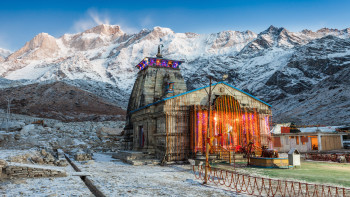
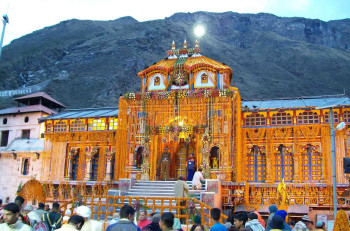
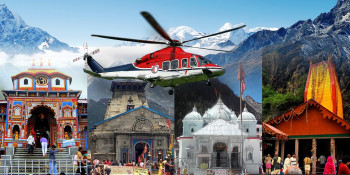
Char Dham Yatra registration: how it works (as of November 2026)
Uttarakhand made registration compulsory so that it can track how many people are on the mountain each day, cap numbers at the shrines in peak weeks and trace pilgrims in an emergency. It costs nothing. Each traveller, including children, needs a separate registration linked to a photo ID, and the registration lists which dhams you will visit and on which dates.
The three ways to register
| Method | Where | When it opens | Best for |
|---|---|---|---|
| Online portal | registrationandtouristcare.uk.gov.in (Uttarakhand Tourism) | Several weeks before the temples open; in 2026 it opened on 6 March | Anyone planning ahead; families registering several people at once |
| Mobile app | "Tourist Care Uttarakhand" on Android and iPhone, same account as the portal | Same as the portal | Changing dates on the move; keeping the QR code on the phone |
| Offline counters | Haridwar and Rishikesh (railway station and bus stand areas) and points on the route such as Barkot, Janki Chatti, Sonprayag, Phata and Joshimath | A few days before the opening; in 2026 from 17 April | Late planners and travellers without a smartphone; expect queues in May |
The scale is large: by the day before the 2026 opening, about 18 lakh pilgrims had already registered online, against a few thousand at counters. That is why peak-week dates fill on the portal well before the season starts.
Registering online, step by step
- Create an account on the portal or app with a mobile number; an OTP confirms it. One account can hold a whole family or group.
- Add each traveller with name exactly as on the ID, age, gender, address, an emergency contact and the ID number. Aadhaar is the usual choice; a passport, voter ID or driving licence also works.
- Choose the dhams and a date for each. Pick dates you can actually reach: if Kedarnath is on day 7 of your itinerary, register Kedarnath for day 7, not the day you leave home.
- Submit and download the registration letter with its QR code for every traveller. Save it on the phone and carry two printed copies; network is weak on parts of the route.
- Change dates if the plan moves. The portal and app allow edits; if a landslide costs you a day, update the registration rather than arriving on an unregistered date.
Where the registration is checked
Police and tourism staff scan QR codes at checkpoints on the approach to each shrine – on the Yamunotri road around Barkot, on the Gangotri road, at Sonprayag before the Kedarnath walk and on the Badrinath highway before Joshimath. Unregistered travellers can be turned back or sent to the nearest counter. Kedarnath helicopter tickets also need a valid registration, and the name and ID on the helicopter booking must match it.
Mistakes we see every season
- Registering only the head of the family. Every person needs a registration, including children and grandparents.
- Name spelt differently from the ID. This causes trouble at helicopter boarding more than anywhere else.
- Registering all four dhams on the same day or on the day of departure from home.
- Relying on the phone alone. Battery and network both fail at altitude; paper copies settle arguments.
- Using unofficial websites that charge a "registration fee". The government registration is free; only travel agents who do it for you as part of a service may charge for their time.
On every yatra we plan, our team registers each traveller, matches the dates to the day-wise plan and sends the letters before departure.
The Char Dham route order and why it runs west to east
The accepted order is Yamunotri → Gangotri → Kedarnath → Badrinath. Tradition holds that the yatra should move from west to east, beginning with the source of the Yamuna and ending at Badrinath, the abode of Vishnu. The geography agrees: Yamunotri and Gangotri sit in Uttarkashi district at the western end of Garhwal, Kedarnath in Rudraprayag district in the middle, and Badrinath in Chamoli district at the eastern end, from where the highway returns to Rishikesh along the Alaknanda. Doing it in any other order adds a day or two of backtracking.
- Starting points: Haridwar and Rishikesh by road or rail, and Dehradun's Jolly Grant airport, which is about 20 km from Rishikesh. Delhi to Haridwar is about 220 km, five to six hours by road.
- Two ways to Barkot: via Dehradun and Mussoorie (shorter, more bends) or via Chamba and Dharasu (wider road). Drivers choose on the day according to traffic and road works.
- Do Dham: if time or health is short, many families do only Kedarnath and Badrinath, starting at Guptkashi. Yamunotri and Gangotri can be done separately on a later trip.
- Night driving: movement on the hill routes is banned between 10 pm and 4 am, and most operators end each day's drive well before dark. Plan stages so that you reach the night halt by evening.
Route stages with distances and drive hours
Distances are by road; times are realistic for a hill-experienced driver in season, including short halts, and can double when a landslide is being cleared.
| Stage | Distance | Drive time | Usual night halt |
|---|---|---|---|
| Rishikesh or Haridwar → Barkot | About 210 – 230 km | 7 – 9 h | Barkot or Syana Chatti |
| Barkot → Janki Chatti, then walk to Yamunotri (about 6 km each way) | About 45 km by road | 1½ – 2 h drive plus 5 – 8 h on foot or pony, up and down | Back to Barkot |
| Barkot → Uttarkashi | About 85 – 100 km | 3½ – 4 h | Uttarkashi |
| Uttarkashi → Gangotri and back | About 100 km each way | 4 h each way; the temple is a short walk from the car park | Uttarkashi, or Harsil to break the journey |
| Uttarkashi → Guptkashi or Sitapur (via Tehri and Ghansali) | About 220 km | 8 – 10 h, the longest day | Guptkashi, Phata or Sitapur |
| Guptkashi → Sonprayag, shared jeep to Gaurikund | About 30 km plus 5 km | 1 – 1½ h, more at peak hours | – |
| Gaurikund → Kedarnath on foot or pony | About 16 – 18 km trail | 6 – 9 h up, 4 – 6 h down | Kedarnath, or back to Guptkashi the same day by helicopter |
| Guptkashi → Badrinath (via Rudraprayag or via Chopta) | About 190 – 200 km | 7 – 9 h | Badrinath |
| Badrinath → Rishikesh or Haridwar | About 300 – 325 km | 10 – 12 h; usually split at Rudraprayag or Srinagar (Garhwal) | Rudraprayag, then Rishikesh |
Add the days up and the bare circuit is eight to nine days. With one rest day after Kedarnath and one buffer day for weather, 10 to 12 days from Haridwar is the honest length for families with parents. Our package page shows a full day-wise plan built on these stages.
Kedarnath: the walk, ponies, palki and the helicopter
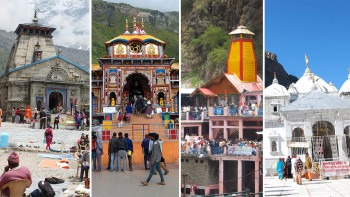
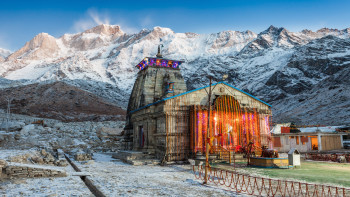
Kedarnath is the only dham where the climb decides the plan. Vehicles stop at Sonprayag; shared jeeps run the last few kilometres to Gaurikund, and from there the trail climbs about 1,600 metres to the temple at about 3,580 m, through Jungle Chatti, Bhimbali and Linchauli. Yamunotri has a shorter walk of about 6 km from Janki Chatti. Gangotri and Badrinath need no trek; the car reaches the temple town.
Ponies, palki and pithu
Ponies, palkis (a chair carried by four bearers) and pithus (a basket carried by one porter) are registered with the district administration and booked at prepaid counters at Gaurikund and Sonprayag, with rates fixed for the season and displayed at the counter. Book only at those counters, keep the receipt and note the pony's or porter's registration number. Ponies may be stopped for the day in heavy rain or crowding, so start early.
How the Kedarnath helicopter is booked
- Register for the yatra first. The helicopter booking asks for the yatra registration number of each passenger.
- Book only on the IRCTC HeliYatra portal (heliyatra.irctc.co.in), the single official channel for the Guptkashi, Phata and Sersi shuttles. Tickets open in phases before and during the season and sell out within minutes in May and June.
- Know the 2026 fares. Return fares published for 2026 were about ₹6,390 from Sersi, ₹10,164 from Phata and ₹12,762 from Guptkashi per person. They are revised each year.
- Carry the same ID used on the booking; names are checked at the helipad.
- Expect weather holds. Flights run in the morning and stop when cloud closes the valley. A helicopter plan still needs a spare day.
Social-media pages and phone numbers that sell "confirmed Kedarnath heli tickets" are a well-known fraud every season. If it is not on the IRCTC portal, it is not a real ticket. A Sonprayag–Kedarnath ropeway was approved in 2025 but will take years to build; for now, the choice is foot, animal, palki or helicopter.
Char Dham opening and closing dates
The temples follow the Hindu calendar, so dates change every year. The 2026 season, for reference:
| Dham | Opened in 2026 | Closes in 2026 | How the date is set | Winter seat |
|---|---|---|---|---|
| Yamunotri | 19 April (Akshaya Tritiya) | 11 November (Bhai Dooj) | Opens on Akshaya Tritiya, closes on Bhai Dooj | Kharsali |
| Gangotri | 19 April (Akshaya Tritiya) | 10 November (Annakut) | Opens on Akshaya Tritiya, closes the day after Diwali | Mukhba |
| Kedarnath | 22 April | 11 November (Bhai Dooj) | Opening announced on Mahashivratri at Ukhimath | Omkareshwar temple, Ukhimath |
| Badrinath | 23 April | 16 November | Opening announced on Basant Panchami; closing fixed on Vijayadashami | Pandukeshwar and Joshimath |
For 2027: no dates have been announced as of November 2026. Badrinath's opening date is normally declared on Basant Panchami (late January or February), Kedarnath's on Mahashivratri (February or March), and Gangotri and Yamunotri open on Akshaya Tritiya in late April or May, with the exact time announced shortly before. Registration usually opens a few weeks before the first temple. We publish the dates to clients the day they are announced; until then, plan the trip by month, not by date.
Within the season, May and June are the busiest, July and August bring monsoon landslides, and mid-September to October is the calmer window. During the winter months the deities are worshipped at the winter seats, and some pilgrims visit those instead.
Health and fitness for the yatra
Three of the four shrines are above 3,000 m, and the yatra combines long road days with one hard climb. Medical posts with doctors and oxygen are set up along the Kedarnath and Yamunotri routes, and staff at the screening points may stop anyone who looks unwell from going higher. For older pilgrims and anyone with heart, lung, blood-pressure or diabetes conditions, a doctor's fitness certificate is advised and can be asked for on the trek routes.
| If the traveller… | Our usual suggestion for Kedarnath |
|---|---|
| Walks 5 km comfortably and climbs four floors without stopping | Walk up, pony down if the knees are tired |
| Is over 60 and generally fit | Pony both ways, with a night at Kedarnath to rest |
| Has knee or back trouble but no heart or lung condition | Palki, or helicopter if seats are available |
| Has a heart or lung condition, or breathlessness on stairs | Helicopter only, after a doctor's clearance; or choose Do Dham with Badrinath by road |
| Is a child under 10 | Pithu or pony with a parent alongside; keep the day short |
- Train for six to eight weeks: a brisk 45-minute walk most days, and stairs twice a week, builds more useful fitness than a gym routine.
- Go up slowly: the stage plan above gains height gradually and sleeps lower after each high shrine. Do not compress it to save a day.
- Know the warning signs of altitude sickness – headache that does not ease, nausea, unusual breathlessness at rest, confusion. The cure is to rest and descend, not to push on.
- Avoid alcohol and sleeping pills on the yatra; both make altitude effects worse, and alcohol is not permitted in the shrine towns.
What to carry for the Char Dham Yatra
Documents
- Original photo ID for every traveller, the same one used to register, plus a photocopy.
- Printed registration letters with QR codes, and helicopter tickets if booked.
- A doctor's fitness note for seniors and anyone with a medical condition, and a list of regular medicines.
Clothing
- Layers rather than one heavy coat: thermal inner wear, a fleece, a down or padded jacket for Kedarnath and Badrinath nights, which fall close to freezing even in May.
- A waterproof jacket or poncho and a small umbrella; rain can arrive any afternoon.
- Walking shoes with good grip, already broken in, plus slippers for temples and hotels. Woollen socks, a cap and gloves.
Health kit
- Regular medicines for the whole trip plus a week, a pulse oximeter, ORS sachets, paracetamol, motion-sickness tablets for the hill roads, antiseptic cream, plasters and lip balm.
- Sunscreen and sunglasses; the sun is strong at altitude.
For the climb day
- A small backpack with water, dry fruit, glucose biscuits, a torch, a power bank and a light change of clothes in a plastic bag.
- Cash in small notes for tea stalls and porters; ATMs are few beyond Uttarkashi and Guptkashi, and UPI fails when the network drops.
- A walking stick, which can also be bought at Gaurikund.
Planning the yatra with Vibrant Holidays
- Private and customised: your own vehicle and hill driver for the whole circuit, your dates and your pace, with a rest day where parents need one; no shared coaches.
- Registration handled: every traveller registered with dates that match the day-wise plan, and the letters sent before you leave home.
- Kedarnath options explained honestly: we tell you whether walking, pony, palki or helicopter suits each family member, and we never sell helicopter seats outside the official portal.
- Pure-veg and Jain meals requested in writing at each night halt; on the high stages food is simple and we say so in advance.
- 11 years of planning pilgrimages from our C G Road office in Ahmedabad, booked on WhatsApp or phone from any city, with 24×7 support on the road. IATA-accredited; member of TAAI, TAFI, ADTOI and IATO; recognised by the Ministry of Tourism, Government of India.
Combining the yatra with other darshan? See our Jyotirlinga tour packages (Kedarnath is one of the twelve), the wider Uttarakhand tour packages, or all our holiday guides.
Plan your trip with Vibrant Holidays
Tell us your dates, budget and who is travelling. We reply with a day-wise plan and a clear price, usually the same day.
Get a Free Quote WhatsApp 9089090790Char Dham Yatra Guide: FAQs
How do I register for the Char Dham Yatra?
Register free on the Uttarakhand Tourism portal registrationandtouristcare.uk.gov.in or the Tourist Care Uttarakhand app. Create an account with your mobile number, add each traveller with a photo ID such as Aadhaar, pick a date for each dham and download the QR registration letter. Offline counters in Haridwar, Rishikesh and on the route open a few days before the temples do.
Is registration compulsory for the Char Dham Yatra?
Yes. Every pilgrim, including children and seniors, must register before visiting any of the four dhams. The QR code is scanned at checkpoints on the way to each shrine, and unregistered travellers can be turned back. Kedarnath helicopter tickets also need a valid yatra registration. Registration itself is free on the government portal and app.
What is the correct route order for the Char Dham Yatra?
The traditional order is Yamunotri, Gangotri, Kedarnath and then Badrinath, moving from west to east across Garhwal. It is also the most practical order, because the four shrines lie roughly in a line from Uttarkashi district to Chamoli district, and the road from Badrinath leads straight back to Rishikesh. Changing the order adds backtracking.
How many days are needed for the Char Dham Yatra?
By road, the circuit from Haridwar or Rishikesh takes eight to nine days without breaks. With a rest day after Kedarnath and a spare day for weather, plan 10 to 12 days, plus travel to and from Haridwar. A helicopter yatra from Dehradun can be done in five to six days. Kedarnath and Badrinath alone take about six days by road.
Can I register for the Char Dham Yatra offline?
Yes. Offline counters open a few days before the temples; in 2026 they started on 17 April. They are at Haridwar and Rishikesh and at points on the route such as Barkot, Janki Chatti, Sonprayag and Joshimath. Carry your photo ID. In May the queues can be long, so online registration in advance is easier for families.
How do I book the Kedarnath helicopter?
Register for the yatra first, then book on the IRCTC HeliYatra portal, the only official channel for the Guptkashi, Phata and Sersi shuttles. Each passenger's registration number and ID are needed. Published 2026 return fares were about ₹6,390 from Sersi, ₹10,164 from Phata and ₹12,762 from Guptkashi. Seats sell out quickly; ignore anyone selling tickets on social media.
When does the Char Dham Yatra 2027 start?
The 2027 dates were not announced as of November 2026. Badrinath's opening is usually declared on Basant Panchami and Kedarnath's on Mahashivratri, while Gangotri and Yamunotri open on Akshaya Tritiya in late April or May. Registration normally opens a few weeks before the first temple. Plan the month now and confirm exact dates once announced.
When does the Char Dham Yatra close in 2026?
Gangotri closes on Annakut, 10 November 2026; Kedarnath and Yamunotri on Bhai Dooj, 11 November 2026; and Badrinath on 16 November 2026, the date fixed on Vijayadashami. After the closing, the deities are worshipped at their winter seats at Mukhba, Kharsali, Ukhimath and Pandukeshwar–Joshimath until the shrines reopen in spring.
How difficult is the Kedarnath trek?
The trail from Gaurikund is about 16 to 18 km with roughly 1,600 metres of climb, ending at about 3,580 m. Fit adults take six to nine hours up and four to six down. The path is paved but steep in places and crowded in May and June. Ponies, palkis and pithus are booked at prepaid counters, and helicopters fly from three helipads.
Is a medical certificate needed for the Char Dham Yatra?
Not for registration itself, but health screening is done on the trek routes and staff can stop anyone unwell from going higher. A doctor's fitness certificate is strongly advised for travellers over 55 or 60 and for anyone with heart, lung, blood-pressure or diabetes conditions, and may be asked for. Carry it with your registration letter.
What should I pack for the Char Dham Yatra?
Carry your photo ID and printed registration, warm layers including a padded jacket, a rain jacket, broken-in walking shoes, woollen cap and gloves, regular medicines for the trip plus a week, a pulse oximeter, ORS and motion-sickness tablets, a torch, a power bank and cash in small notes, since ATMs and network are unreliable higher up.
