Best Time to Visit Seychelles: Winds, Calm Months and Beaches
Seychelles is hot and green in every month, and storms rarely reach it. What changes through the year is the wind, and the wind decides which beaches are calm, how rough the Praslin ferry is and how clear the water looks.
The best time to visit Seychelles for most travellers is April to May and October to November. These are the calm months between the two trade winds: the sea is flat and clear, snorkelling visibility is at its best, and almost every beach on Mahé, Praslin and La Digue is swimmable. June to September is the drier, breezier season of the south-east trades, very good for touring and value but rough on south-east facing beaches and on the ferry. December to March is the season of the light north-west wind, the warmest and most humid time, with the heaviest rain in December and January.
Unlike Mauritius, Seychelles sits only about four degrees south of the equator, outside the usual track of Indian Ocean cyclones, so there is no month to rule out. The real question is which island and which beach suit the wind in your month. This guide goes month by month, then wind by wind, then by island, wildlife, festivals and traveller type, with entry rules and the hotel levy checked as of November 2026. For flights, costs and day-wise plans, see our Seychelles tour packages from Ahmedabad page.
Updated November 2026 by the Vibrant Holidays team, Ahmedabad.
Holiday packages for the places in this guide
All 7 matching packages on Vibrant Holidays — 3 to 5 nights. Every package can be customised for departure from your city.
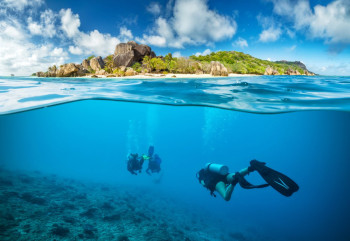
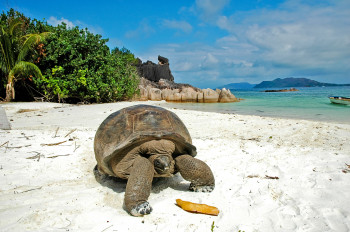
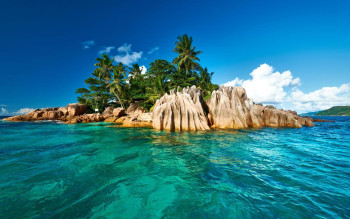
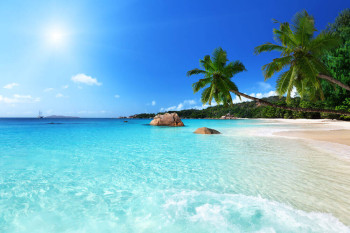
Seychelles weather month by month
Day high / night low in °C and sea temperature for Mahé, rounded. Rain on Mahé falls mostly as short tropical showers; the mountain interior gets more than the coast. "Sea state" means the beaches facing the wind of the season.
| Month | Air °C | Sea °C | Rain | Wind and sea | Verdict |
|---|---|---|---|---|---|
| January | 30 / 24 | 28 | Wettest, around 390 mm on Mahé | Light north-west wind; some swell on north-west coasts | Hot and showery; lush and quiet after New Year |
| February | 30 / 25 | 28 | High but easing | Light north-west wind | Fair; warm water, short heavy showers |
| March | 31 / 25 | 29 | Moderate | Wind fading | Good; very warm sea |
| April | 31 / 25 | 29 | Moderate, falling | Calm; glassy mornings | Excellent for snorkelling and diving |
| May | 30 / 25 | 28 | Low to moderate | Calm, south-east trades start late in the month | Excellent; one of the two best months |
| June | 28 / 24 | 27 | Driest, around 60 mm on Mahé | South-east trades steady | Good for touring; choose sheltered beaches |
| July | 27 / 24 | 26 | Very low | Trades strongest; choppy crossings | Good value; least warm month |
| August | 27 / 24 | 26 | Low | Strong trades | Good; breezy and pleasant on land |
| September | 28 / 24 | 26 | Low | Trades easing | Very good late in the month |
| October | 29 / 24 | 27 | Moderate | Calm | Excellent; Festival Kreol in the last week |
| November | 30 / 24 | 28 | Moderate, rising | Calm, north-west wind begins late | Excellent; best honeymoon month |
| December | 30 / 24 | 28 | High, around 300 mm on Mahé | North-west wind settles in | Good first half; peak rates at Christmas |
The range is narrow: the hottest month is only three or four degrees warmer than the coolest, and the sea never drops below about 26°C. Humidity stays high all year, which is why the breezy months feel more comfortable on land even though they are not the best for the beach.
The three wind seasons, explained simply
South-east trades: May or June to September
A steady wind from the south-east, sometimes strong in July and August. Air is drier and fresher, showers are few, and walking the trails of Morne Seychellois or cycling on La Digue is pleasant. The cost: beaches facing south and east get waves and currents, the water is stirred up so visibility drops, and seaweed washes onto some shores. Boat trips still run but feel bumpy.
North-west wind: December to March
A lighter, warmer wind from the north-west, bringing humid air and most of the year's rain, usually as heavy downpours that clear within an hour or two. Now the south and east coasts become calm and the north-west facing beaches, such as Beau Vallon on Mahé, can get some swell. Everything is very green.
The calm months: April to May and October to November
Between the two winds, the air goes still for several weeks. The sea turns flat and clear on almost every beach, which is why divers, snorkellers and honeymooners favour these months. The trade-off is heat: without a breeze, middays feel hotter than the thermometer says. Plan beach time for the morning and late afternoon and keep lunch in the shade.
Which beach on which island in which wind
The famous beaches face different directions, so the right choice changes with the season. This is how we pick them for clients; local conditions on the day always come first, and red flags on a beach mean no swimming.
| Island and beach | Faces | Best months | What to know |
|---|---|---|---|
| Mahé – Beau Vallon | North-west | May to November | Sheltered in the trades; the easiest family beach, with lifeguards and restaurants; some swell from December to March |
| Mahé – Anse Intendance, Takamaka | South | October to April | Big surf and strong currents in the trades; for photos then, not swimming |
| Mahé – Anse Royale, east coast | East | November to April | Calm lagoon swimming in the north-west season |
| Praslin – Anse Lazio | North-west | April to November | Calm in the trades; can be wavier from December to March |
| Praslin – Côte d'Or (Anse Volbert) | North-east | October to May | Long, shallow, very family-friendly; seaweed and wind on some days from June to September |
| Praslin – Anse Georgette | West | Most of the year | Reached through a resort; strong waves on some winter days |
| La Digue – Anse Source d'Argent | West | All year, best in calm months | Shallow and sheltered; plan around the tide, as it gets too shallow to swim at low tide |
| La Digue – Grand Anse, Petite Anse | South-east | Calm days from October to April | Dangerous currents in the trades; walk and photograph, do not swim |
Seaweed: from about June to September the trades push seaweed onto some south-east facing shores, mainly on parts of Praslin. Hotels on those stretches clear it each morning, but it can still smell and cloud the water. If you travel in these months, a stay on the north-west side of Praslin or on Beau Vallon avoids most of it.
Tides: they matter more than people expect, especially on La Digue. Hotels keep tide tables at reception, and we time the Anse Source d'Argent ride for the hours around high tide.
Ferries and island flights by season
Most first trips use Mahé, Praslin and La Digue, joined by fast catamaran ferries and, between Mahé and Praslin, a short domestic flight.
- Mahé to Praslin: about an hour by catamaran across open sea. In the calm months it is smooth; from June to September it can be properly rough, and seasickness is common. In those months we book the 15-minute flight for parents, children and anyone who gets motion sickness, and keep luggage within the small plane's limit.
- Praslin to La Digue: about 15 minutes, close to the shore and usually fine in every month.
- Cancellations: ferries are rarely cancelled, but in a strong-wind spell timings can shift. We never put an inter-island crossing on the day of the international flight home; the last night is always on Mahé.
- Boat day trips: trips to Curieuse, St Pierre, Cousin and the Sainte Anne Marine Park are at their best in the calm months, when snorkelling stops are clear and the boats glide. In the trades, operators choose sheltered spots and some trips run shorter.
Wildlife and underwater calendar
| What | Best months | Where and how |
|---|---|---|
| Snorkelling and diving visibility | April to May; October to November | Flat water and clear visibility; Sainte Anne Marine Park, St Pierre islet, Port Launay, Anse Lazio rocks |
| Hawksbill turtles nesting | About October to March | Mostly in the day on protected islands such as Cousin and Curieuse; sightings are a bonus, not a promise |
| Seabird colonies | About April to October | Sooty terns nest in very large numbers on Bird Island; noddies and tropicbirds on Cousin and Aride |
| Whale sharks | Historically about August to November | Once seen off Mahé in the season; sightings have become rare, so we do not plan a trip around them |
| Giant Aldabra tortoises | All year | Curieuse ranger station, L'Union Estate on La Digue, Moyenne Island in the marine park |
| Vallée de Mai and the coco de mer | All year; the forest is most atmospheric after rain | Black parrot calls at dawn; start early in the humid months |
| Hiking, Morne Seychellois and Copolia | June to September | Drier, cooler trails; slippery after rain in December and January |
Cyclones, rain and the honest risks
Tropical cyclones in this part of the Indian Ocean form mostly further south, between November and April, and track towards Madagascar, Réunion and Mauritius. Mahé, Praslin and La Digue sit close to the equator and are very rarely in their path. Distant storms can bring a day or two of wind, swell and rain, and the far-flung outer islands such as Aldabra are more exposed, but for an ordinary holiday the cyclone season is not a reason to avoid any month.
The real weather risk is a wet spell in December or January, when a grey, rainy day can come in the middle of a short stay. Two ways to manage it: give the trip at least six nights so one lost beach day does not matter, and put the most weather-dependent plans, such as the boat day to Curieuse and St Pierre, early, with a spare day afterwards.
Heat and sun are the other risk most Indian travellers underestimate. The UV index is extreme near the equator in every month. Reef-safe sunscreen, a hat, a rash vest for snorkelling and plenty of water matter more here than in Dubai or Thailand.
Festivals and holidays in Seychelles
| Event | When | What it means for visitors |
|---|---|---|
| Festival Kreol | Last week of October every year (the 40th edition was in October 2025) | Creole music, dance, food stalls and fashion, mostly in Victoria; a good reason to spend an evening on Mahé |
| Fèt La Digue (Assumption Day) | 15 August | La Digue's own feast, with a procession and crowds coming over from the other islands; book ferries early |
| National Day | 29 June | Parade in Victoria; offices and some shops closed |
| Christmas and New Year | 24 December to 1 January | Peak hotel rates and minimum stays; churches busy on La Digue and Praslin |
| Hindu festivals | Thaipoosam, Deepavali and others, on the Tamil calendar | The Hindu temple in Victoria marks them with the local Indian community; visitors are welcome to see the temple |
Indian holidays and the Seychelles season
| Indian window | Seychelles then | Rates | Our view |
|---|---|---|---|
| Diwali, late October to early November | Calm, clear, warm sea | High in Diwali week | One of the best fits of the year; Diwali 2027 falls around 29 October |
| Wedding-season honeymoons, mid-November to mid-December | Calm in November, showers rising in December | High | Late November is ideal; La Digue rooms are few, so book three to four months ahead |
| Christmas and New Year | Wettest weeks, still warm | Peak | Possible, but you pay the most for the least reliable weather |
| January to February weddings | Humid, green, heavy showers | Medium after the first week of January | Good value with at least six nights; prefer east and south beaches |
| Summer vacation, May to early June | Calm May, trades from June | Medium | Excellent in May; from June keep families on Beau Vallon or the north-west of Praslin |
| July to August | Breezy, dry, choppy sea | Lower, except European holiday weeks | Good for touring and walking; fly between Mahé and Praslin |
Seychelles, Mauritius or the Maldives: which in which month
Many couples shortlist all three. Their seasons are quite different, so the month often decides.
| Months | Seychelles | Mauritius | Maldives |
|---|---|---|---|
| January to March | Humid, showery, no cyclone worry | Hot, wet, highest cyclone risk | Dry season, the best of the three |
| April to May | Calm and clear, the best of the three | Warm, risk falling, very good | Hot; rain starts in May |
| June to September | Dry and breezy, good for touring | Cool winter, dry, windy east coast | Wet south-west monsoon, lowest rates |
| October to November | Calm and clear, excellent | Dry and warming, excellent | Mixed, improving through November |
| December | Rain rising | Good first half | Dry season begins, peak rates |
For the detail on the other two, read our best time to visit Mauritius and best time to visit the Maldives guides. Seychelles suits couples who want to move between islands, walk and cycle, not only stay in one resort; the Maldives suits a stay on one island with the water at the door.
Best time to visit Seychelles for different travellers
| Traveller | Best months | Why | Think twice about |
|---|---|---|---|
| Honeymoon couples | October to November; April to May | Calm sea, clear water, every beach open | Christmas rates and December rain |
| Families with children | April to May; October | Flat water for small swimmers, school breaks fit | Rough ferry crossings in July and August |
| Parents above 60 | June to September for the breeze; or April and October | Fresher air for sightseeing in Victoria and the Vallée de Mai | Midday heat in the still months |
| Snorkellers and divers | April to May; October to November | Best visibility | Murky water on windward coasts in the trades |
| Walkers and cyclists | June to September | Drier trails, cooler air | Fewer swimmable beaches on some coasts |
| Birdwatchers | April to October | Seabird colonies nesting | Boat trips to Bird Island and Aride depend on sea state |
| Value seekers | Mid-January to March; June to early July | Lower rates outside the peaks | Showers in the first, wind in the second |
Vegetarian and Jain travellers: does the season matter?
The food situation is the same all year, but the season changes how you eat. In the wetter months, when you may spend a rainy afternoon at the hotel, half board is worth more, because dinner is then arranged and vegetarian or Jain requests are already with the kitchen. In the breezy months, days are spent touring and cycling, so carry dry snacks from home, such as khakhra, thepla and roasted chana, for La Digue and the boat trips, where lunch stops are usually fish-based. Fresh fruit from Victoria market is excellent from November to March, when mangoes and other tropical fruit are in season.
Diwali-week travellers often ask about celebrating abroad. Victoria's Hindu temple and the small Indian community make Deepavali visible on Mahé, and resorts will arrange a simple puja corner or a vegetarian festive dinner on request, which we confirm in writing before you travel.
Entry rules and hotel levy: the same in every month
- No visa, but a Travel Authorisation: as of November 2026 no nationality needs a visa, and a free visitor's permit is issued on arrival. Every traveller, including infants, must have an approved Travel Authorisation from the official Seychelles Electronic Border System before boarding. The government fee is EUR 10; with added charges it came to about EUR 12 per person in 2026. Avoid look-alike sites that charge more.
- At immigration: a passport valid for the stay and ideally six months beyond, return ticket, confirmed rooms for every night and proof of funds. Entry is at the officer's discretion; we prepare the paperwork with you but cannot promise the outcome.
- Tourism sustainability levy: from 1 January 2026, SCR 75 per person per night at mid-sized hotels (25–50 rooms) and SCR 100 at large hotels, island resorts and yachts, collected by the property. Small guesthouses no longer charge it, and children aged 12 and under are exempt. At about ₹6 to the Seychellois rupee, that is roughly ₹450–600 per adult per night.
Rules change; we check them again before you pay. Other easy-entry options are on our visa-free countries for Indians list.
How we plan Seychelles around the season
- Beaches matched to the wind: north-west facing stays in the trades, east and south in the north-west season, anywhere in the calm months.
- Crossings chosen by month: ferry when the sea is calm, the short flight for parents and children from June to September.
- Weather buffers: six nights or more, boat days early, the last night on Mahé.
- Private and customised: your own dates and private transfers; families travel as a private group on their own schedule.
- 11 years of planning holidays from our C G Road office in Ahmedabad, booked on WhatsApp or phone, with 24×7 support during the trip. IATA-accredited; member of TAAI, TAFI, ADTOI and IATO; recognised by the Ministry of Tourism, Government of India.
See itineraries with live prices on our Seychelles tour packages page, compare other islands on our best honeymoon destinations abroad from India list, or browse all holiday guides.
Plan your trip with Vibrant Holidays
Tell us your dates, budget and who is travelling. We reply with a day-wise plan and a clear price, usually the same day.
Get a Free Quote WhatsApp 9089090790Best Time to Visit Seychelles: FAQs
Which is the best month to visit Seychelles?
April, May, October and November are the best months for most travellers. The wind drops between the two trade-wind seasons, so the sea is flat and clear on almost every beach and snorkelling visibility is at its best. November suits wedding-season honeymoons and October suits Diwali holidays. Middays are hot and still, so plan beach time for mornings and evenings.
Is there a cyclone season in Seychelles?
Not in the way Mauritius has one. Mahé, Praslin and La Digue lie close to the equator, outside the usual track of Indian Ocean cyclones, which form further south from November to April. A distant storm may bring a day of wind and rain, and the remote outer islands are more exposed, but no month needs to be avoided.
What is the rainy season in Seychelles?
The wettest months are December and January, when Mahé gets around 300 to 400 mm of rain a month, mostly as heavy showers that pass within an hour or two. February and March are still humid. June to August is the driest stretch. Rain is spread across the year, so even the dry months have the odd shower.
Is Seychelles good to visit in July and August?
Yes, with the right beaches. The south-east trades make July and August dry, breezy and pleasant on land, and rates are lower outside European holiday weeks. But south and east facing beaches get waves and seaweed, and the Mahé to Praslin ferry can be rough. Stay on Beau Vallon or north-west Praslin and take the short flight between islands.
Is December a good time for Seychelles?
The first half of December is good: warm sea, green islands and showers that come and go. From about 20 December rates reach their peak for Christmas and New Year, minimum stays apply, and December is one of the two wettest months. For a wedding-season honeymoon, late November gives calmer weather at a lower rate.
When is seaweed a problem in Seychelles?
From about June to September, when the south-east trades push seaweed onto some south and east facing shores, mostly on parts of Praslin such as stretches of Côte d'Or. Hotels clear it daily, but the water can look cloudy. Beaches facing north-west, like Anse Lazio and Beau Vallon, are usually clear in those months.
When is the best time for snorkelling and diving in Seychelles?
April to May and October to November. With little wind the sea is flat, visibility is at its highest and boats reach the best spots, such as the Sainte Anne Marine Park and St Pierre islet near Praslin. In the trade-wind months, snorkelling is still possible on sheltered coasts but visibility is lower and boat rides are bumpier.
Can I see turtles in Seychelles?
Hawksbill turtles nest on protected islands such as Cousin and Curieuse roughly from October to March, often during the day, and rangers sometimes show visitors a nesting female or tracks. Sightings are likely in season but never certain. Turtles can also be seen while snorkelling in the marine parks through the year.
Is Seychelles better than Mauritius in January?
For weather risk, yes. January is Mauritius's cyclone season, while Seychelles sits outside the usual storm track. Both are hot and showery in January. Seychelles has the wilder beaches and island hopping; Mauritius has more vegetarian restaurants and easier day tours. If your dates are flexible, the Maldives is drier than both in January.
Do Indians need a visa for Seychelles?
No visa is needed, as of November 2026. A free visitor's permit is issued on arrival, but every traveller must first get an approved Travel Authorisation on the official Seychelles Electronic Border System, costing about EUR 12 per person with charges. Carry a return ticket, hotel bookings and proof of funds; entry remains at the immigration officer's discretion.
How much is the Seychelles hotel levy?
From 1 January 2026 the tourism sustainability levy is SCR 75 per person per night at hotels with 25 to 50 rooms and SCR 100 at larger hotels, island resorts and yachts, roughly ₹450 to ₹600. Small guesthouses no longer charge it and children aged 12 and under are exempt. It is the same in every season.
How many nights should I plan for Seychelles?
Six to eight nights across Mahé, Praslin and La Digue in most months. In December and January, when a rainy day is more likely, we suggest at least seven so one grey day does not cost you a beach. In the trade-wind months, add a night if you plan the boat trips, as the sea may push one by a day.
