Schengen Visa for Indians: Fees, Documents and the 2026 Rules
Which country's embassy handles your file, what the visa costs in rupees, how long slots and decisions take, and how a first Europe trip turns into a five-year visa.
Do Indians need a Schengen visa? Yes. An Indian passport holder needs a Schengen short-stay visa (type C) to visit any of the 29 Schengen countries for tourism, family visits or business, for up to 90 days in any 180-day period. One visa covers France, Switzerland, Italy, Germany, Austria, the Netherlands, Spain, Greece and the rest of the area, but you apply to one country only: the one where you will spend the most nights. The adult fee is €90, the standard decision time is 15 calendar days, and the hardest part for most families is not the paperwork but getting a biometric appointment in time for the May vacation or Diwali.
This guide is for Indian residents applying from India in 2026. It explains the main-destination rule with worked examples, lists the documents for salaried, self-employed, retired and student applicants, converts the full cost into rupees, covers the appointment problem and how early to book, and explains three changes that matter this year: the "cascade" rule that gives repeat travellers two-year and five-year visas, the Entry/Exit System now in use at Schengen borders, and ETIAS, which does not apply to Indians who hold a visa. Rules and fees were checked against European Commission, EU Delegation to India, French consular and VFS Global information as of October 2026; rules change — we check before you book.
Updated October 2026 by the Vibrant Holidays team, Ahmedabad.
Holiday packages for the places in this guide
All 6 matching packages on Vibrant Holidays — 3 to 5 nights. Every package can be customised for departure from your city.





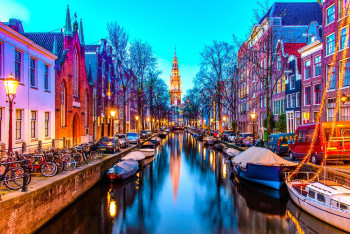
Schengen visa at a glance for Indian applicants (2026)
| Question | Answer as of October 2026 |
|---|---|
| Visa type for a holiday | Uniform short-stay visa (type C), single or multiple entry |
| Maximum stay | 90 days in any rolling 180-day period, across all Schengen countries together |
| Countries covered | 29: Austria, Belgium, Bulgaria, Croatia, Czechia, Denmark, Estonia, Finland, France, Germany, Greece, Hungary, Iceland, Italy, Latvia, Liechtenstein, Lithuania, Luxembourg, Malta, Netherlands, Norway, Poland, Portugal, Romania, Slovakia, Slovenia, Spain, Sweden, Switzerland |
| Not covered | United Kingdom, Ireland, Cyprus, Türkiye, Serbia and other non-Schengen states need their own visa or entry rules |
| Visa fee | €90 adults; €45 children from 6 to under 12; free under 6. Paid in rupees at the consulate's rate |
| Service charge | Charged separately by the visa application centre (VFS Global or the country's chosen provider) |
| Standard decision time | 15 calendar days from the day the consulate receives the file; can be extended to 45 days |
| When to apply | No earlier than 6 months before departure; at least 15 days before is the legal minimum, but 6–8 weeks is the realistic target |
| Biometrics | Fingerprints and photo taken in person; reused for 59 months if recorded on an earlier application |
| Travel insurance | Mandatory; minimum €30,000 medical and repatriation cover valid in all Schengen states |
| Refund if refused | None; the visa fee and the service charge are kept |
The €90 fee has applied since June 2024, when the EU raised it from €80. Nothing has changed it for 2026. Fee waivers exist for some categories, such as school students on organised educational trips, but not for ordinary family holidays.
Which country should you apply to? The main-destination rule
You do not choose the embassy you like best. EU rules decide it for you, and applying to the wrong one is one of the quickest ways to a refusal or a returned file.
- Most nights wins. Apply to the country where you will stay the longest. Count nights in hotels, not hours of sightseeing.
- Purpose can override length. If the reason for the trip is in one country – a wedding in Italy, a trade fair in Germany – that country is the main destination even if you spend similar time elsewhere.
- A tie goes to the first entry. If no country has more nights and no single purpose stands out, apply to the country where you first enter the Schengen area.
Worked examples from real itineraries
| Itinerary | Nights by country | Apply to |
|---|---|---|
| Paris – Swiss Alps – Paris, 9 nights | France 4, Switzerland 5 | Switzerland |
| Amsterdam – Paris – Lucerne – Venice – Rome, 11 nights | Netherlands 2, France 3, Switzerland 3, Italy 3 | Netherlands – no single main destination, so the country of first entry decides |
| Vienna – Salzburg – Munich – Prague, 8 nights | Austria 4, Germany 2, Czechia 2 | Austria |
| Barcelona – Madrid – Lisbon, 8 nights | Spain 5, Portugal 3 | Spain |
| Nephew's wedding in Milan plus a Swiss week | Italy 3, Switzerland 5 | Italy may be accepted as the purpose country; confirm with the consulate |
Two practical points. First, the itinerary you submit should be the one you actually travel; shifting nights afterwards so that a different country becomes the main destination can count against you at the next application. Second, small changes can move the answer: one extra night in Interlaken in the first example turns a French file into a Swiss one. We build the itinerary first and choose the consulate from it, never the other way round.
Documents checklist for a Schengen tourist visa from India
Every applicant
- Passport issued within the last 10 years, valid at least 3 months beyond the date you leave the Schengen area, with at least two blank pages. Bring older passports with previous visas – they support a cascade claim.
- Application form for the chosen country, completed online where the country uses its own portal (France-Visas, for example) and signed.
- Photographs: 35 × 45 mm, white background, taken within the last six months, no spectacles.
- Cover letter stating who is travelling, the purpose, the dates and who pays.
- Day-wise itinerary with cities and hotels that match the bookings.
- Hotel confirmations for every night; a host's invitation and address proof if staying with family.
- Return flight reservation – a held booking is accepted by most consulates; buying non-refundable tickets before the decision is not required.
- Travel insurance certificate with €30,000 minimum medical cover, valid for the whole trip and all Schengen states.
- Bank statements for the last 3–6 months, stamped or digitally verifiable, and income-tax returns for 2–3 years.
By profile
| Applicant | Add these |
|---|---|
| Salaried | Employer leave letter or NOC on letterhead, last 3 salary slips, Form 16 |
| Self-employed or business owner | GST or Udyam certificate, shop and establishment licence or partnership deed, business bank statement, ITRs |
| Retired | Pension statement or proof of investment income; a sponsorship letter from children if they pay |
| Homemaker | Spouse's financial documents with a sponsorship letter and marriage certificate or joint document showing the relationship |
| Student | Bonafide letter and leave approval from school or college; parents' financial documents and consent |
| Child under 18 | Birth certificate, both parents' passport copies, consent from any parent not travelling |
On funds: most consulates do not publish a single minimum balance for Indian applicants. What officers check is whether the money shown comfortably covers the trip and whether it is your own, built up over months. A sudden large deposit shortly before applying raises questions; explain it in the cover letter if there is a genuine reason, such as a fixed deposit that matured.
What a Schengen visa really costs in rupees
| Item | Adult | Child 6–11 | Notes |
|---|---|---|---|
| Visa fee (€90 / €45) | about ₹9,000 – 10,000 | about ₹4,500 – 5,000 | Exact rupee figure set by each consulate and revised with the exchange rate |
| Application centre service charge | about ₹2,000 – 3,000 | about ₹2,000 – 3,000 | Varies by country and provider; includes GST |
| Travel insurance, 10–15 days | ₹1,200 – 3,500 | ₹1,000 – 2,500 | Seniors over 60–70 pay noticeably more, often ₹4,000 – 10,000 |
| Optional extras | ₹500 – 4,000 | ₹500 – 4,000 | Courier return, SMS updates, premium lounge, form-filling |
| Typical total | ₹12,500 – 18,000 | ₹8,000 – 12,500 | Children under 6 pay no visa fee but still need insurance |
For a family of four with two children under 12, budget roughly ₹42,000 – 55,000 for visas and insurance together. None of it is refunded on refusal, which is the main reason to apply once with a complete file rather than "trying" with a thin one.
Appointments: the real bottleneck, and where to give biometrics
Decisions inside 15 days are normal once a file reaches the consulate. Getting the appointment is the slow part. From late January to May, slots for France, Switzerland, Italy and Spain in the large Indian cities can be fully booked several weeks out, and new slots are often released in batches. Summer travellers who start in April regularly find nothing before their flight.
- Six months is the opening line: you can apply up to six months before departure. For travel in the Gujarat summer vacation, start in January or February.
- Book the slot first, then finalise: we hold flights and hotels on refundable terms so the appointment can be taken as soon as one opens.
- Any centre in India is usually allowed: many Schengen countries let Indian residents give biometrics at any of their centres, though the file is decided by the consulate covering your state. Some countries still insist on the centre for your jurisdiction; we check per country.
- Ahmedabad has a VFS Global centre: it is at Shree Balaji Agora Mall, Motera, on the Sardar Patel Ring Road, and handles applications for several Schengen countries including France, Italy, Austria and Czechia. Gujarat residents applying to a country not served there go to Mumbai, which is the consular jurisdiction for Gujarat for most Schengen states.
- Repeat applicants: if your fingerprints were taken in the last 59 months, some countries let you submit without attending in person. Bring the earlier visa copy.
Avoid paying unofficial "slot agents" who promise an appointment for a fee. Several consulates have cancelled appointments booked through such resellers.
The cascade rule: two-year and five-year Schengen visas for Indians
On 18 April 2024 the European Commission adopted a specific "cascade" regime for Indian nationals living in India. It is the single biggest improvement in Schengen access for Indians in years, and it is in full use in 2026.
| Your history | What you can be issued |
|---|---|
| First application, or no lawful use of recent visas | A visa for the trip dates, usually with a few days' margin |
| Two Schengen visas obtained and lawfully used within the previous three years | A two-year multiple-entry visa |
| The two-year visa used lawfully | Normally a five-year multiple-entry visa, if the passport has enough validity left |
- "Lawfully used" means you travelled on the visa and kept to its conditions – no overstay, no working, entries and exits in line with the 90/180 rule.
- Passport validity limits the visa. A five-year visa cannot run past your passport's expiry minus three months. Renew a passport with less than five years left before you apply, and carry the old one.
- Still a short-stay visa. The 90-days-in-180 limit applies throughout; a five-year visa does not allow longer stays.
- Not automatic. Consulates may still issue a shorter visa where the file is weak. A clean, consistent travel history is what earns the longer one.
For families who visit Europe every year or two, the practical lesson is to travel on each visa you are given and keep every old passport. Two well-used trips are the route to not filing again for five years.
EES and ETIAS: what changes at the border in 2026
Entry/Exit System (EES) – now in use
The EU's Entry/Exit System began a phased rollout on 12 October 2025 and became fully operational on 10 April 2026. It replaces passport stamps for non-EU short-stay travellers, Indians included. At your first Schengen border crossing after the rollout, officers or self-service kiosks record your passport details, a facial image and fingerprints (children under 12 give only a photo). The record is then used to count your days automatically.
- Allow extra time at your first entry: registration adds minutes per person, and queues at large airports were long in the early months.
- Overstays are now visible instantly: the system calculates the 90/180 days without relying on stamps, so a careless overstay of even a day is recorded.
- Your visa is still required: EES is a border record, not a permission to travel.
ETIAS – not for Indian visa holders
ETIAS is an online travel authorisation for nationalities that do not need a Schengen visa, such as Americans or Australians. Indians need a visa, so ETIAS does not apply to them. As of October 2026 ETIAS was expected to launch in the last quarter of 2026. If a website asks an Indian passport holder to pay for ETIAS, it is either mistaken or a scam.
Common reasons Schengen visas are refused for Indians, and fixes
| Refusal ground (as written on the form) | What usually caused it | Fix before reapplying |
|---|---|---|
| Purpose and conditions of stay not justified | Itinerary vague, hotels not matching cities, no cover letter | Day-wise plan with confirmed bookings for each night |
| Insufficient means of subsistence | Low or newly deposited balance; sponsor's documents missing | Longer statement history, ITRs, sponsorship letter with proof of relationship |
| Intention to leave not established | No proof of job, business or family ties in India | Leave letter, business registration, property or family documents |
| Wrong consulate | Applied to a country with fewer nights | Recount nights; apply to the main destination |
| Insurance not valid | Cover below €30,000, wrong dates, or excludes some countries | New policy covering the whole trip and all Schengen states |
| Unreliable information | Forged or cancelled hotel bookings, inconsistent dates | Use only genuine, verifiable bookings; this ground affects future applications |
A refusal letter lists the ground ticked by the consulate. You may appeal within the period stated on the letter, or reapply with the gap fixed; reapplying with the same file rarely changes the answer. Declare earlier refusals honestly on any later visa form, including UK and US applications.
How we handle a Schengen file for you
- Itinerary first: we fix cities, nights and hotels, which settles the consulate under the main-destination rule.
- Profile checklist: you receive a checklist matched to your profile – salaried, business, retired, student – and send scans on WhatsApp for a review before anything is printed.
- Bookings that match: refundable hotels, held flights and a compliant insurance policy, all with the same dates.
- Appointment: we book the earliest suitable slot, at VFS Ahmedabad where the country accepts it, and brief you on what to carry.
- Submission: we prepare and submit your application; approval is at the embassy's discretion. We track the passport and share updates.
- After approval: flights are ticketed and vouchers sent as PDF, with a printed set for immigration.
Vibrant Holidays has planned holidays from Ahmedabad since 2015. We are IATA-accredited; members of TAAI, TAFI, ADTOI and IATO; and recognised by the Ministry of Tourism, Government of India. Every Europe trip we plan is private, on your own dates, with Indian and Jain meals arranged on request where available.
See itineraries and prices on our Europe tour packages from Ahmedabad page and the full list of Europe packages. If your dates leave no time for a Schengen appointment, compare Turkey from Ahmedabad, or read our Dubai visa, Thailand visa and visa-free countries guides. More guides are on the holiday guides page.
Plan your trip with Vibrant Holidays
Tell us your dates, budget and who is travelling. We reply with a day-wise plan and a clear price, usually the same day.
Get a Free Quote WhatsApp 9089090790Schengen Visa: FAQs
What is the Schengen visa fee for Indians in 2026?
The visa fee is €90 for adults and €45 for children from six to under twelve; children under six pay nothing. In rupees that is roughly ₹9,000 to ₹10,000 for an adult, depending on the consulate's exchange rate. The application centre adds a service charge of about ₹2,000 to ₹3,000, and neither amount is refunded if the visa is refused.
How long does a Schengen visa take from India?
Consulates normally decide within 15 calendar days of receiving the file, and the period can be extended up to 45 days in individual cases. The bigger delay is the appointment: in spring, slots for popular countries can be weeks away. Apply six to eight weeks before travel, and earlier for May vacation or Diwali dates.
Which country should I apply to for a multi-country Europe trip?
Apply to the country where you will spend the most nights. If a specific purpose such as a wedding or conference ties the trip to one country, that country can be the main destination. If nights are equal and no purpose stands out, apply to the country where you first enter the Schengen area.
What is the Schengen cascade rule for Indians?
Adopted by the EU in April 2024, it lets Indian residents who have obtained and lawfully used two Schengen visas within the previous three years receive a two-year multiple-entry visa. After using that correctly, applicants can normally get a five-year visa, provided the passport is valid long enough. The 90-days-in-180 limit still applies.
Is there a VFS centre for Schengen visas in Ahmedabad?
Yes. VFS Global runs a visa application centre at Shree Balaji Agora Mall in Motera, Ahmedabad, which accepts applications for several Schengen countries, including France, Italy, Austria and Czechia. Countries not served there usually take Gujarat applicants in Mumbai. We confirm the right centre for your main-destination country before booking the slot.
How much bank balance is needed for a Schengen visa from India?
Most consulates do not fix one figure for Indian tourists. Officers judge whether your balance comfortably covers flights, hotels and daily spending for the trip, and whether the money has been in your account for months. Steady salary credits or business income with income-tax returns matter more than one large balance deposited just before applying.
Do Indians need ETIAS to visit Europe?
No. ETIAS is for travellers from countries that do not need a Schengen visa. Indian passport holders need a visa, so they do not apply for ETIAS. ETIAS was expected to start in the last quarter of 2026. Ignore any website that asks an Indian visa holder to pay for ETIAS authorisation.
What is the EES and how does it affect Indian travellers?
The Entry/Exit System records non-EU travellers at Schengen borders and replaced passport stamping when it became fully operational on 10 April 2026. On your first entry your face and fingerprints are captured; children under twelve give only a photograph. It counts your days automatically, so allow extra time at immigration and never overstay.
Is travel insurance mandatory for a Schengen visa?
Yes. Every applicant must show travel medical insurance with at least €30,000 of cover for emergency treatment and repatriation, valid in all Schengen states for the whole trip. Indian insurers sell compliant policies; premiums rise sharply for travellers over sixty or seventy. The insurance dates must match the itinerary submitted with the application.
Can I visit the UK or Turkey on a Schengen visa?
No. The United Kingdom needs its own visitor visa, applied for separately with biometrics. Türkiye is outside Schengen too, but an Indian with a valid Schengen visa can apply for the Turkish e-visa online instead of a sticker visa. Cyprus, Ireland and the Balkan countries outside Schengen each have their own rules.
What happens if my Schengen visa is refused?
The refusal letter shows which ground the consulate used, such as unjustified purpose or insufficient funds. You can appeal within the time limit stated on the letter or reapply after fixing the gap. Fees are not refunded. Declare the refusal truthfully on later visa forms, because consulates share data through the Visa Information System.
How early can I apply for a Schengen visa?
Up to six months before your departure date, and no later than 15 calendar days before it. For summer travel from Gujarat, start the file in January or February, because appointment slots disappear first. Book refundable hotels and held flights so the documents are ready the day a slot opens.
