Best Time to Visit Meghalaya: Rain, Rivers and Root Bridges by Month
Meghalaya changes more between seasons than almost anywhere in India: roaring waterfalls and closed views in July, a glass-clear river and dry waterfalls in February. Choose the month by what you want to see.
The best time to visit Meghalaya for most travellers is mid-October to April. In those months the roads are dry, the valleys at Sohra (Cherrapunji) are clear in the mornings, the Umngot river at Dawki turns transparent enough to see the stones under the boats, and the steps down to the living root bridges are safe underfoot. November is the single best month: the rain has stopped, the waterfalls still carry water, Shillong's cherry trees flower and the Garo and Khasi harvest festivals are held. The trade-off of winter is thinner waterfalls by February and March.
The monsoon, from June to September, is not a closed season; it is a different trip. Sohra and Mawsynram receive some of the heaviest rain on earth, the falls are at full roar and the hills are a deep green, but views disappear into cloud, the river at Dawki turns brown and landslides can shut roads for hours. This guide covers Meghalaya month by month, explains when each famous sight is at its best, walks through the regions from Shillong to the Garo Hills, lists the festivals of 2026–27, and ends with verdicts for families, couples, seniors and trekkers. Facts that change are checked as of November 2026.
Updated November 2026 by the Vibrant Holidays team, Ahmedabad.
Holiday packages for the places in this guide
Our latest matching packages on Vibrant Holidays — 3 to 15 nights. Every package can be customised for departure from your city.
Meghalaya month by month: the quick verdict
Shillong day high / night low in °C, rounded long-term averages. Sohra is a little cooler and far wetter; Dawki and the Bangladesh border plains are 5–8 degrees warmer.
| Month | Shillong °C | Rain at Sohra | Dawki water | Root-bridge trails | Crowds | Verdict |
|---|---|---|---|---|---|---|
| January | 16 / 4 | Almost none | Crystal clear | Dry, cool climb | Low | Very good; cold mornings |
| February | 18 / 6 | Very little | Crystal clear | Dry | Low | Very good; waterfalls thin |
| March | 22 / 10 | First showers | Clear | Dry, warmer climb | Low to moderate | Good; some haze |
| April | 24 / 13 | Rising, storms | Mostly clear, can cloud after storms | Mostly fine | Moderate | Good; Shad Suk Mynsiem |
| May | 24 / 15 | Heavy | Turning murky | Wet and slippery | Moderate (summer vacation) | Fair; Shillong cool, views patchy |
| June | 24 / 17 | Very heavy | Muddy, boating unsafe | Not advised | Low | Monsoon trip only |
| July | 24 / 18 | Extreme | Muddy | Not advised | Low | Waterfall lovers only; Behdienkhlam |
| August | 24 / 17 | Very heavy | Muddy | Not advised | Low | Monsoon trip only |
| September | 24 / 16 | Heavy, easing late | Clearing late | Wet | Low | Late September with slack |
| October | 22 / 13 | Tailing off | Clearing | Drying out | High in Puja and Diwali weeks | Very good; big waterfalls, clearer views |
| November | 19 / 8 | Dry | Clear | Ideal | High mid-month | Excellent; cherry blossom, Wangala |
| December | 17 / 5 | Dry | Crystal clear | Ideal | High at Christmas in Shillong | Excellent; cold nights |
Sunset comes early in the east of India: around 4.30 to 4.45 pm in December and January. Winter sightseeing days in Meghalaya are short, so we start at 7 or 8 am and plan the drive back to Shillong before dark.
Why Sohra and Mawsynram are so wet, and when they are dry
Sohra and Mawsynram sit on the southern lip of the Khasi plateau, where moist monsoon winds from the Bay of Bengal cross the flat plains of Bangladesh and hit the hills head-on. The air is forced up 1,300 m in a few kilometres and drops its water. On long-term averages each place gets roughly 11,000 to 12,000 mm a year, about fifteen times what Ahmedabad or Delhi receive, and most of it falls between June and September.
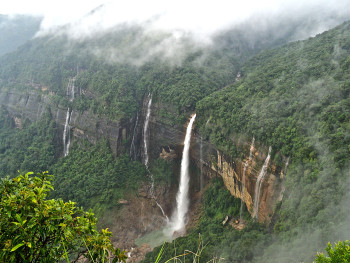
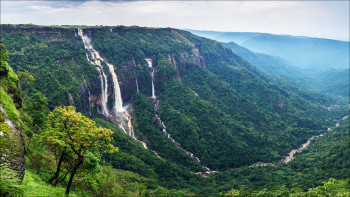
The surprise for visitors is how dry the same places are in winter. From December to February Sohra can go weeks without rain; the famous falls such as Nohkalikai and Seven Sisters shrink to thin threads, and villages on the plateau run short of water. So the two halves of the year offer opposite trips:
- Monsoon (June to September): waterfalls at full force, mist pouring through the gorges, rain for days at a time, and frequent periods when you cannot see across the valley at all.
- Post-monsoon (October to mid-November): the best balance. The falls are still strong, but the skies open up and the views to the Bangladesh plains return.
- Dry winter (December to March): clear views and dry trails, with reduced falls. Ideal for treks, caves and the river.
- Pre-monsoon (April and May): thunderstorms build in the afternoons, the falls start to fill again, and the river begins to cloud.
If seeing Nohkalikai at full flow matters more than anything else, choose late September to mid-October; if the walk to Nongriat or a boat on the Umngot matters most, choose November to March.
When each famous sight is at its best
| Sight | Best months | Why | Off-season reality |
|---|---|---|---|
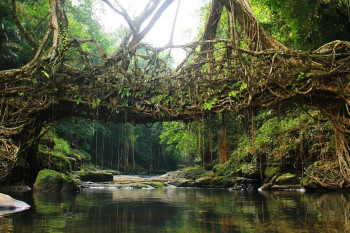
| Double-decker root bridge, Nongriat | November to March | Dry, grippy steps and cooler air for the climb back | Wet, slippery steps and swollen streams in the monsoon; we do not plan it from June to September |
| Easier root bridges (Riwai near Mawlynnong and others) | October to April | Short walks, pleasant weather | Possible in the rain with care |
| Dawki and Shnongpdeng (Umngot river) | November to March | Water so clear the boats seem to float in air | Muddy and unsafe for boating June to September; riverside camps close |
| Krang Suri falls, Jaintia Hills | October to April | Blue pool, safe steps | Steps slippery and the pool rough after heavy rain |
| Nohkalikai, Seven Sisters, Wei Sawdong | Late September to November | Full falls with views | Thin by February; hidden by cloud on many monsoon days |
| Laitlum canyons, Wakhen and Mawkdok viewpoints | October to February | Clear long views at sunrise | Often in cloud from June to September |
| Mawsmai, Arwah and other caves | November to April | Dry passages; long wild caves in Jaintia and Garo Hills are explored in the dry season | Water inside some caves in the monsoon |
| Umiam Lake, Shillong city | All year | Close to the main road, no climbs | Fine on a rainy day |
The Nongriat double-decker bridge is a long climb, commonly counted at about 3,000 to 3,500 steps each way. Whatever the month, start before 8 am so the climb back is done before the afternoon heat or rain. The Meghalaya destination page has our full fitness guidance on which bridge suits whom.
Region by region: Shillong, Sohra, Dawki, the Jaintia and Garo Hills
Shillong and Umiam (East Khasi Hills, Ri-Bhoi)
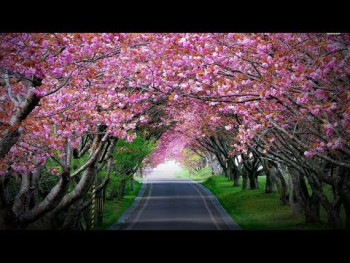
The capital, at about 1,500 m, is pleasant in every month. It is cool even in May, and in winter nights drop to 4–5°C; most homes and many hotels have no central heating. November brings the cherry blossom, December a festive Christmas, since Meghalaya has a large Christian population and churches and Police Bazar are lit for weeks. Shillong is also the right base for a monsoon trip, because it is the one place where rain rarely stops you doing anything.
Sohra (Cherrapunji) and Mawsynram
Best from October to March. Stay a night or two in Sohra rather than driving from Shillong each day, so that you are at the viewpoints in the clear early hours before cloud rises from the valleys. Mawsynram has fewer sights for visitors; its cave of stalagmites at Mawjymbuin is reachable any time but most comfortable in the dry months.
Dawki, Shnongpdeng and Mawlynnong
The southern villages on the border are lower and warmer. November to March gives the clear river and safe riverside camping at Shnongpdeng; boat rides cost about ₹700–1,000 per boat for two or three people as of November 2026. In the monsoon the road down through Pynursla has its own landslide risk; in July 2025 the authorities advised visitors to avoid the Shillong–Dawki road via Pynursla for a period.
Jaintia Hills: Jowai, Krang Suri, Nartiang
Two hours east of Shillong, quieter and less visited. October to April suits Krang Suri and the monoliths of Nartiang. July has Behdienkhlam, the great festival of Jowai.
Garo Hills: Tura, Nokrek, Siju, Balpakram
Far west, lower and hotter, and usually reached via Guwahati and the Assam plains. November is the month to go: the weather is dry and the Wangala harvest festival is held near Tura. The long caves at Siju and the wild Balpakram plateau are dry-season trips for adventurous travellers.
Festivals in Meghalaya, 2026–27
Meghalaya's festivals belong to its Khasi, Jaintia (Pnar) and Garo communities. Some have fixed state dates; others are set each year by the community, so we confirm before you build a trip around one.
| Festival | Where | When | What you see |
|---|---|---|---|
| Shillong Cherry Blossom Festival | New Shillong Highland Grounds, Mahmawdkuk | 20–21 November 2026 | Music festival timed with the Himalayan cherry bloom; blossom across Shillong around mid-November |
| Wangala (100 Drums) | Asanang near Tura, Garo Hills | November; state listing 13 November 2026 and 14 November 2027 | Garo harvest thanksgiving with long rows of drummers and dancers in feathered headgear |
| Nongkrem dance | Smit, about 15 km from Shillong | Usually around November, five days; 2026 dates set locally and not published as of November 2026 | Khasi thanksgiving for the harvest, with dances by unmarried women in gold and silk |
| Christmas and New Year | Shillong and every town | 24 December to 1 January | Lit churches, carols, a busy Police Bazar; hotels full |
| Shad Suk Mynsiem | Weiking ground, Shillong | April | Khasi "dance of the joyful heart" for the sowing season |
| Behdienkhlam | Jowai, Jaintia Hills | July (in 2026 the main celebrations were reported around 9 July) | Pnar festival to drive away plague and bring a good harvest; decorated towers carried through town and a muddy pool contest |
November alone has the cherry blossom, Wangala and usually Nongkrem, which is why mid-November is the busiest fortnight for Shillong hotels after Christmas. If you want Wangala, plan a night in Tura; it is a long drive from Shillong.
Roads, flights and registration through the year
- Getting in: most visitors fly to Guwahati and drive about three hours up to Shillong. Shillong's own airport at Umroi has only limited flights. In the monsoon allow extra time for slips on the hill roads and for traffic at the Jorabat junction on the Guwahati side.
- Monsoon roads: the Shillong–Sohra road usually stays open, but the roads to Dawki, Mawsynram and the Jaintia Hills see more landslides. From June to September we keep drives short and avoid tight evening returns.
- Fog: winter mornings on the plateau can be foggy until about 9 am, especially on the road to Sohra; drivers slow down and so should the plan.
- No Inner Line Permit: Indian citizens need no ILP or entry permit for Meghalaya as of November 2026. Every hotel and homestay registers its guests on the state's tourism system, so each traveller needs a photo ID at check-in.
- Proposed entry registration: in July 2026 the state announced plans for an ILP-style registration of visitors at entry points, starting at Umling on the Guwahati road. It was not in force as of November 2026. We check again before your trip and tell you if anything is needed.
- Kaziranga combination: Kaziranga National Park in Assam normally opens to visitors from October or November to April or May, which matches Meghalaya's dry season and makes the pairing easy in winter.
Best time to visit Meghalaya for families, couples, seniors and trekkers
| Traveller | Best months | Why | Think twice about |
|---|---|---|---|
| Families with children | October to November; late December | Big waterfalls still flowing, dry roads, school holidays | The Nongriat climb for small children |
| Honeymoon couples | November to February | Clear river, cosy Shillong evenings, cherry blossom in November | Christmas week prices |
| Parents above 60 | October to November; March | Mild days, fewer steps on wet ground | Cold January nights; monsoon road delays |
| Trekkers and cavers | November to March | Dry steps, dry caves, cool air for the climb | April storms and the monsoon |
| Waterfall chasers | Late September to October; July if you accept rain | Falls at or near their peak | February and March, when many are thin |
| Photographers | November to January | Clear river, sunrise over the canyons, festival colour | Monsoon cloud hiding the valleys |
| Culture seekers | November (Wangala, Nongkrem); April; July | Harvest and sowing festivals | Assuming every festival date is fixed in advance |
| Budget travellers | March and early April; late January | Quiet hotels and good weather | Cheap monsoon rates, which come with lost sightseeing days |
If you are choosing between Meghalaya and the Himalaya for the same holiday, the seasons line up neatly: Meghalaya is at its best in exactly the months when Sikkim's high roads are snowbound. Our best time to visit Sikkim guide covers that side.
What to pack for Meghalaya by season
- November to February: a warm jacket, thermals for Shillong nights, a cap and gloves for early starts, sunscreen for bright days.
- March to May: light layers, a rain jacket for afternoon storms, shoes with good grip.
- June to September: a proper raincoat (umbrellas struggle in Sohra's wind), quick-dry clothes, waterproof sandals or trekking shoes, plastic bags for phones, and spare socks.
- October: a light jacket and a rain layer, both will be used.
For any root-bridge walk carry water and snacks, wear shoes with real grip rather than new sports shoes, and leave heavy bags in the car. Many village sights charge small entry and parking fees, so keep cash; UPI works in Shillong and most of Sohra, mobile data is weak near Nongriat and Dawki.
How we plan a Meghalaya trip around the season
- Classic winter trip: November to March, five or six nights: Shillong, two nights at Sohra for Nongriat and the viewpoints, Dawki and Mawlynnong, with Krang Suri if time allows.
- Waterfall trip: late September to October, with Sohra nights and a flexible day for cloud.
- Festival trip: mid-November in Shillong for the cherry blossom and Nongkrem, or Tura for Wangala.
- Monsoon trip: Shillong base, Sohra for the falls, no Nongriat and no boat, with easy rest days.
- Private and customised: your own car and driver from Guwahati, your own dates; friends and family travel as a private group on their own schedule.
- Season-aware plans: early starts in winter's short days, Sohra overnights for clear mornings, and honest advice on which walks suit your group.
- Vegetarian and Jain meals requested in writing; easy in Shillong and Guwahati, simple in villages, and we say so.
- 11 years of planning holidays from our C G Road office in Ahmedabad, booked on WhatsApp or phone, with 24×7 support on tour. IATA-accredited; member of TAAI, TAFI, ADTOI and IATO; recognised by the Ministry of Tourism, Government of India.
Ready itineraries with live prices are on our Meghalaya tour packages page, and combined Assam trips on North East tour packages. For another hill trip in the same months, see the best time to visit Darjeeling, or browse all our holiday guides.
Plan your trip with Vibrant Holidays
Tell us your dates, budget and who is travelling. We reply with a day-wise plan and a clear price, usually the same day.
Get a Free Quote WhatsApp 9089090790Best Time to Visit Meghalaya: FAQs
Which is the best month to visit Meghalaya?
November. The monsoon is over, the roads and trails are dry, the waterfalls still carry water, the river at Dawki is clear and Shillong has its cherry blossom and harvest festivals. October is best if you want bigger waterfalls, and December to February if you want the clearest river and cool trekking weather.
Is it good to visit Meghalaya in the monsoon?
It depends on what you want. From June to September the waterfalls are spectacular and the hills are deep green, but views are often lost in cloud, the Dawki river turns muddy, boating is unsafe and landslides close roads for hours. Treks like Nongriat are not advised. A Shillong-based, flexible trip works best.
When is the Dawki river clear?
From about November to March, and often into April. That is when the Umngot river at Dawki and Shnongpdeng becomes so clear that the boats appear to float in air. From June to September the water is muddy and boating is unsafe. A boat costs about 700 to 1,000 rupees for two or three people as of November 2026.
When is the best time for the living root bridges trek?
November to March. The steps down to the double-decker bridge at Nongriat are dry and the air is cool for the long climb back, usually counted at about 3,000 to 3,500 steps. In the monsoon the steps are slippery and the streams swollen, so we avoid it from June to September.
When is the Shillong Cherry Blossom Festival in 2026?
The festival is scheduled for 20 and 21 November 2026 at the New Shillong Highland Grounds in Mahmawdkuk, about 30 minutes from central Shillong. The Himalayan cherry trees usually bloom around mid-November, but the timing depends on the weather, so full bloom on a given day is never guaranteed.
Do Indians need an Inner Line Permit for Meghalaya?
No. As of November 2026 Indian citizens need no ILP or entry permit. Hotels and homestays register every guest on the state system, so carry photo ID. The state has proposed an ILP-style entry registration, first at Umling on the Guwahati road, but it was not in force as of November 2026. We check again before you travel.
When are the waterfalls in Meghalaya at their best?
From July to early October, when Nohkalikai, Seven Sisters and the other falls near Sohra are at full flow. Late September to October gives the best balance, with strong falls and clearer views. By February and March many falls are thin, though Krang Suri and the bigger ones still look good.
Is December a good time to visit Meghalaya?
Yes, one of the best. The skies are clear, the Dawki river is at its clearest and the trails are dry. Shillong nights fall to about 4 to 5 degrees, and sunset is around 4.30 pm, so start days early. Christmas week is festive and busy in Shillong, with higher hotel rates.
When is Wangala festival held?
Wangala, the Garo harvest festival, is held in November, with the best-known 100 Drums celebration at Asanang near Tura in the Garo Hills. The Meghalaya holiday listing shows 13 November in 2026 and 14 November in 2027, though dates can be updated. Tura is far from Shillong, so plan a night there.
Is Meghalaya too cold in winter for seniors?
Not too cold, but cold enough to plan for. Days are mild at about 16 to 18 degrees, while nights in Shillong fall to 4 to 6 degrees and many rooms have only heaters. Choose hotels with heating, pack thermals, and avoid the very early starts. October, November and March are gentler months for seniors.
How many days are enough for Meghalaya?
Five nights covers Shillong, two nights at Sohra with the root bridges, and Dawki with Mawlynnong. Six or seven nights adds Krang Suri and the Jaintia Hills or a rest day. Add two or three nights for Kaziranga in Assam between November and April, when the park is open.
