Thailand Visa for Indians (October 2026 Rules)
Indian tourists still enter Thailand without a visa, but the free stay is now 30 days, not 60. Here is exactly what changed, what to carry and when you need an e-visa instead.
Short answer, as of October 2026: Indians holding an ordinary passport do not need a visa for a Thailand holiday of up to 30 days. Since 15 September 2026 the visa-free stay is 30 days per entry, down from the 60 days allowed from July 2024. You still have to fill the free Thailand Digital Arrival Card (TDAC) online before you land, and immigration can ask to see your return ticket, hotel bookings and money for the trip. If you want to stay longer than 30 days, or you are going for business, you need a proper visa – for tourists that means the Thai e-visa, applied online before travel.
Thailand has changed its rules for Indian visitors four times since 2023, and a lot of pages online still describe the old 60-day exemption or a paid visa on arrival that never came into force for India. This guide sets out the current position from the Royal Thai Embassy in New Delhi, the Tourism Authority of Thailand and the Embassy of India in Bangkok, explains each option with costs in rupees, and lists the document mistakes that actually get Indian travellers held at Suvarnabhumi and Phuket. Rules change; we check them again before every booking and a week before you fly.
Updated October 2026 by the Vibrant Holidays team, Ahmedabad.
Holiday packages for the places in this guide
Our latest matching packages on Vibrant Holidays — 2 to 12 nights. Every package can be customised for departure from your city.
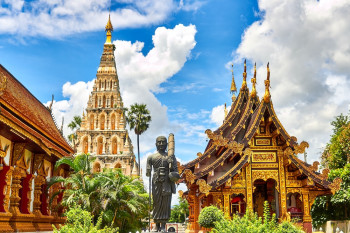
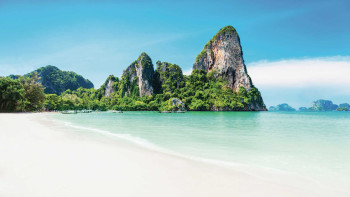
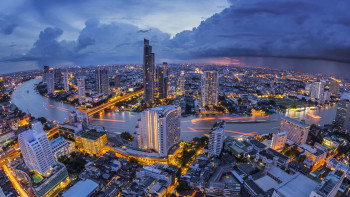
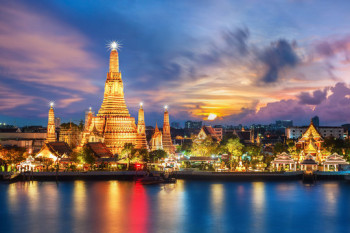
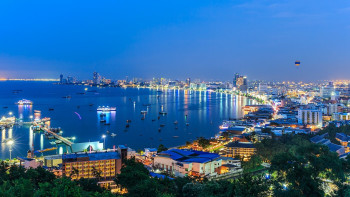
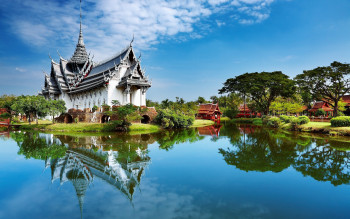


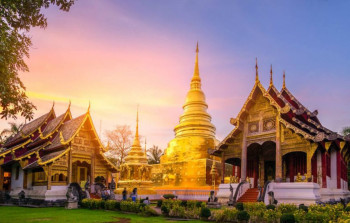
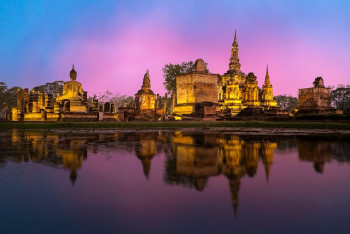
Thailand entry options for Indian passport holders at a glance
| Route | Stay allowed | Cost | Where you apply | Who it suits |
|---|---|---|---|---|
| Visa exemption (visa-free) | Up to 30 days per entry | Free | Nothing to apply for; fill TDAC online | Almost every holiday: honeymoon, family trip, friends' getaway |
| Visa exemption + extension in Thailand | Up to 30 more days | THB 1,900 (about ₹5,500), cash | Any Thai immigration office, before day 30 | Travellers who decide to stay on after arriving; approval is not automatic |
| Tourist e-visa, single entry | 60 days | ₹3,000 government fee | thaievisa.go.th (official portal) | Long holidays, retirees visiting family, slow island-hopping |
| Tourist e-visa, multiple entry | 60 days per entry, 6-month validity | ₹13,500 | thaievisa.go.th | Frequent visitors over a short period |
| Destination Thailand Visa (DTV) | Up to 180 days per entry, 5-year validity | ₹30,000 | thaievisa.go.th | Remote workers and long-stay "workcation" travellers with strong funds |
| Transit visa | Short transit stays | ₹2,500 | thaievisa.go.th | Rarely needed by Indian tourists now |
| Visa on arrival | – | – | – | Not open to Indians: the 2026 list covers only Azerbaijan, Belarus and Serbia |
The e-visa fees above are the Royal Thai Embassy, New Delhi rates in force from 27 April 2026. The baht-to-rupee conversion is approximate. Business meetings, conferences and any paid work are not covered by the visa exemption – those travellers need a non-immigrant visa from ₹7,000.
What changed in 2026, and what it means for your trip
Here is the sequence, because it explains why you will find conflicting answers online:
- November 2023: Thailand first waived visas for Indian tourists, for 30 days, as a temporary measure.
- 15 July 2024: India was added to a 93-country scheme allowing 60 days without a visa.
- May 2026: the Thai Cabinet approved a shorter list of visa-exempt countries that did not include India, and Indian travellers were expected to move to a paid visa on arrival.
- July 2026: after objections from the travel industry, the visa-on-arrival idea for India was dropped. On 14 July 2026 the Cabinet approved a revised framework with India on the 30-day list; the Royal Thai Embassy in New Delhi confirmed this on 27 July.
- 31 August 2026: four Ministry of Interior announcements were published in the Royal Gazette. One repealed the 60-day scheme; another created the new 30-day tourism exemption for 60 countries and territories, India among them.
- 15 September 2026: the new rule took effect. Travellers who entered on or before 14 September keep the stay stamped in their passport.
The practical effect: for a normal 5–10 night holiday nothing changes – you still fly without a visa. What changed is the ceiling. A 5-week stay with relatives in Bangkok, a long Koh Samui retreat or a month-plus backpacking loop now needs either an extension inside Thailand or an e-visa arranged before you leave India. Decide this before booking flights, because immigration officers check that your return date falls inside the 30 days.
Land-border cap: visitors using the 30-day exemption can generally enter Thailand by land only twice per calendar year. Air arrivals are not limited this way. This matters if you plan a Thailand – Malaysia – Thailand or Thailand – Cambodia – Thailand overland loop; fly one of the legs or we will plan the route so it does not hit the cap.
Documents Thai immigration can ask Indian visitors for
Visa-free does not mean nobody checks. The Embassy of India in Bangkok's September 2026 advisory and Thai official guidance list the following. Keep paper copies in your hand luggage, not only on your phone.
- Passport with at least six months' validity from the date you arrive, with blank pages and no damage. Torn laminate or water stains cause more trouble than people expect.
- Confirmed return or onward air ticket leaving Thailand within 30 days.
- Hotel bookings for every night, or a Thai address if you stay with family, plus a clear day-by-day plan. A package itinerary PDF works well.
- Money for the stay. Sources differ here. Older Thai guidance mentioned THB 10,000 per person or THB 20,000 per family; the Indian Embassy in Bangkok now advises carrying at least THB 20,000 per passenger (roughly ₹55,000–60,000 at current rates). We follow the safer, higher figure: carry part of it in cash (baht or US dollars) and the rest as an international debit or credit card with a recent bank statement.
- TDAC confirmation – the QR code or PDF from the Thailand Digital Arrival Card.
- Travel insurance – not formally checked at the counter, but strongly advised; a hospital bill in Phuket can run into lakhs.
Families and groups: each traveller must carry their own set of documents. If a group of friends booked hotels under one person's name, carry the booking that lists all guests. Children travelling with only one parent should carry a consent letter from the other parent and a copy of their passport.
How to fill the Thailand Digital Arrival Card (TDAC)
The paper TM6 arrival card has been replaced by the TDAC. It is free, takes about ten minutes per person, and is mandatory for every foreign arrival, including children.
- Use only the official site: tdac.immigration.go.th. Several look-alike sites charge ₹1,000–3,000 for the same form; the Thai government charges nothing.
- Timing: submit within the 72 hours (3 days) before you land in Thailand. Earlier submissions are not accepted.
- Information needed: passport details exactly as printed, flight number and arrival date, the address of your first hotel, occupation, and countries visited in the previous two weeks (asked for health screening).
- Group submissions: one person can add family members in the same application, but each traveller gets a separate TDAC number.
- Save the confirmation: download the PDF or screenshot the QR code; immigration officers may ask for it.
- If your flight changes: edit the existing card online rather than starting a new one.
Our clients receive a filled sample with their hotel addresses already listed, so the only step left is entering passport numbers and pressing submit.
Staying longer than 30 days: extension or e-visa
Option 1 – extend the visa exemption inside Thailand
Travellers already in Thailand can apply at an immigration office (Bangkok's Chaeng Watthana, Phuket, Pattaya and other provincial offices) for one extension of up to 30 days. The fee reported by immigration practitioners is THB 1,900, paid in cash, with a passport photo, a copy of the passport pages and your hotel address. Extensions are at the officer's discretion, and the queues at Chaeng Watthana can take most of a day. Treat it as a back-up, not a plan.
Option 2 – apply for the Thai tourist e-visa before you go
- Portal: thaievisa.go.th, operated by the Ministry of Foreign Affairs. Applications from India are handled by the Royal Thai Embassy in New Delhi and the consulates in Mumbai, Chennai and Kolkata according to your state of residence – the portal assigns the right mission when you enter your address.
- Fees (from 27 April 2026): ₹3,000 single entry (60 days, extendable by 30 days in Thailand); ₹13,500 multiple entry; ₹30,000 for the Destination Thailand Visa.
- Typical documents: passport scan, recent photograph, confirmed flights, hotel bookings or an invitation letter, bank statements for the last six months, and proof of employment or business (salary slips, ITR or GST registration).
- Funds expectation: missions in India ask for evidence of funds with the e-visa; the exact amount differs between New Delhi and the consulates, so we check the current figure for your jurisdiction.
- Processing: plan for two to four weeks, and longer in peak months; the embassy may ask for extra documents. Fees are not refunded if the application is refused.
For a 31–60 day stay, the single-entry e-visa is simpler than relying on an extension. For 60–90 days, an e-visa plus an in-country extension works. Beyond that, the DTV or a non-immigrant visa is the honest route.
Why Indians get stopped at Thai immigration (and how to avoid it)
- Return date beyond 30 days: the most common problem since the September change. Some travellers booked a 35-day trip in August under the old 60-day rule. Move your return flight or arrange an e-visa.
- No hotel booking for part of the trip: "we will book in Phuket when we get there" invites questions. Show bookings for all nights, even if refundable.
- Too little money: a young group of friends with ₹10,000 of cash between them and no card is a classic secondary-inspection case. Carry the THB 20,000 equivalent each.
- Purpose mismatch: carrying samples, telling the officer you are "meeting suppliers", or travelling on a job offer. The exemption is for tourism only.
- Frequent short visits: back-to-back visa-free entries with short gaps (the "visa run" pattern) attract scrutiny, and land entries are capped at two per year.
- Passport problems: under six months' validity, a damaged page, or names that do not match the air ticket.
- Fake TDAC: a confirmation bought from an unofficial site that never reached Thai immigration. Use only tdac.immigration.go.th.
- Transit confusion: if you continue from Bangkok to a third country, carry that country's visa; airlines check it at the Ahmedabad or Mumbai counter.
Planning a Thailand holiday inside the 30-day limit
Thirty days is more than nine out of ten Indian holidaymakers use. Here is how typical trips fit:
| Trip | Nights | Visa route | Note |
|---|---|---|---|
| Bangkok + Pattaya | 4–5 | Visa-free | The classic first trip abroad |
| Phuket + Krabi honeymoon | 5–7 | Visa-free | Add Phi Phi island day trips |
| Bangkok + Phuket + Krabi family trip | 7–9 | Visa-free | Fly Bangkok–Phuket to save a day |
| Northern Thailand (Chiang Mai, Chiang Rai) + Bangkok | 8–10 | Visa-free | Best November–February |
| Thailand + Singapore or Malaysia | 9–12 | Visa-free Thailand; check Singapore rules | Fly between countries to stay clear of the land-entry cap |
| Long stay with relatives or slow islands | 31–60 | Tourist e-visa | Apply three to four weeks ahead |
See our Thailand holiday packages with live prices, and the Thailand tour packages from Ahmedabad page for flight options from SVPI Airport, itineraries and food tips. If you are comparing destinations, our guide to visa-free countries for Indians covers the other easy options.
How Vibrant Holidays handles Thailand entry for you
- Rule check at quote and before departure: we confirm the current Thai entry rule when you book and again a week before you fly, and tell you on WhatsApp if anything has moved.
- Arrival document pack: your PDF pack holds the air tickets, every hotel voucher, the day-wise itinerary and an immigration cover sheet, in the order officers ask for them.
- TDAC help: we send the filled reference details and, if you prefer, complete the card with you on a call within the 72-hour window.
- E-visa when needed: for stays over 30 days or business trips, we prepare and submit your Thai e-visa application; approval is at the embassy's discretion.
- Private trips, your dates: every Thailand trip is private and customised, with veg and Jain meals arranged on request and confirmed in writing. 24×7 on-tour support; office on C G Road, Ahmedabad, open Monday to Saturday. IATA-accredited; member of TAAI, TAFI, ADTOI and IATO; recognised by the Ministry of Tourism, Government of India.
Plan your trip with Vibrant Holidays
Tell us your dates, budget and who is travelling. We reply with a day-wise plan and a clear price, usually the same day.
Get a Free Quote WhatsApp 9089090790Thailand Visa: FAQs
Is Thailand visa-free for Indians in 2026?
Yes. As of October 2026, Indian ordinary passport holders can visit Thailand for tourism without a visa for up to 30 days per entry. The rule took effect on 15 September 2026 after publication in the Royal Gazette on 31 August. You still need to fill the free Thailand Digital Arrival Card online within 72 hours before arrival.
Is the 60-day visa-free stay for Indians still valid?
No. The 60-day exemption that began on 15 July 2024 was repealed and replaced by a 30-day exemption from 15 September 2026. Travellers who entered Thailand on or before 14 September keep the stay already granted. Anyone arriving now gets up to 30 days and needs an e-visa or an in-country extension for longer.
Can Indians get a visa on arrival in Thailand?
Not at present. A plan to shift India to a paid visa on arrival was announced in May 2026 but dropped in July, and India was placed on the 30-day exemption list instead. The 2026 visa-on-arrival list covers only Azerbaijan, Belarus and Serbia, so Indians either enter visa-free or apply for an e-visa in advance.
How much money do Indians need to show at Thai immigration?
Sources differ. Earlier Thai guidance mentioned THB 10,000 per person or THB 20,000 per family, but the Embassy of India in Bangkok now advises carrying at least THB 20,000 per passenger. We suggest following the higher figure, keeping some cash in baht or dollars and an international card with a recent bank statement.
What is the Thailand Digital Arrival Card and is there a fee?
The TDAC is the online arrival form that replaced the paper TM6 card. It is free and must be completed at tdac.immigration.go.th within the 72 hours before you land. You enter passport, flight and hotel details and receive a QR code. Avoid look-alike websites that charge a fee for the same form.
How much does the Thailand e-visa cost for Indians?
From 27 April 2026 the Royal Thai Embassy in New Delhi charges ₹3,000 for a single-entry tourist visa allowing 60 days, ₹13,500 for multiple entry, ₹2,500 for transit and ₹30,000 for the Destination Thailand Visa. Applications are made on thaievisa.go.th. Fees are not refunded if the visa is refused.
Can I extend my 30-day visa-free stay in Thailand?
Usually yes, once, for up to 30 more days, by applying at a Thai immigration office before your permitted stay ends. The reported fee is THB 1,900 in cash, with a photo and passport copies. The extension is at the officer's discretion, so if you already know you need more than 30 days, apply for the tourist e-visa before leaving India.
Can I use visa-free entry for a business trip to Thailand?
No. The 30-day exemption introduced in September 2026 covers tourism only. Business meetings, trade fairs, conferences and any work need a non-immigrant visa, which starts at ₹7,000 for single entry. Travellers with a job offer in Thailand are specifically warned by the Indian Embassy not to enter on the tourist exemption.
How long should my passport be valid for Thailand?
At least six months from your date of arrival, with blank pages for stamps and no physical damage. Airlines in India check this at check-in and can refuse boarding. If your passport expires within the next year, renew it before booking, because the new number also has to appear on your TDAC and tickets.
Is there a limit on how many times Indians can enter Thailand visa-free?
For air arrivals there is no fixed annual number, though frequent short visits attract questions. Entries by land under the 30-day exemption are generally capped at two per calendar year. If your trip crosses into Malaysia, Cambodia or Laos by road and comes back, plan one of those legs by air.
Do children need a separate TDAC and documents?
Yes. Every traveller, including infants, needs their own passport and their own TDAC number, although one adult can fill the cards for the family in a single session. Children travelling with one parent should carry a consent letter from the other parent. Carry hotel bookings that list every family member by name.
