Rann Utsav Tour Packages from Ahmedabad
Salt flats that turn silver under the full moon, Kutchi embroidery in mud-walled villages and a Harappan city on the Road to Heaven – driven from your door in Ahmedabad.
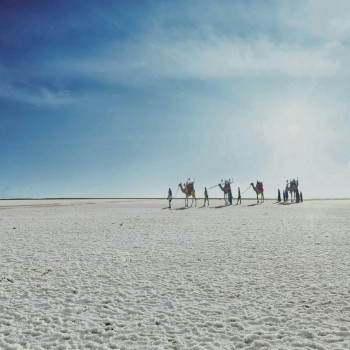
Rann Utsav is the season when the Great Rann of Kutch, dried out after the monsoon into a crust of white salt, becomes Gujarat's biggest winter trip. A tent city goes up at Dhordo, the last village before the salt, with folk music in the evenings and day trips to the craft villages, Kalo Dungar and the Rann at sunset. For the 2026–27 season, Gujarat Tourism and the tent-city operator Evoke Experiences have announced dates of 1 November 2026 to 7 March 2027.
From Ahmedabad it is a long but simple drive across the Little Rann and Bhachau to Bhuj and then north to Dhordo, or a train to Bhuj with a car waiting. This page covers what Rann Utsav tour packages from Ahmedabad cost and why tent prices vary so much, the road, train and flight options, the full-moon nights of the season, the White Rann permit, three day-wise plans, a month table, packing for cold desert nights and how to combine the trip with Dholavira. It is written for travellers starting from Ahmedabad; for shorter Kutch ideas see our weekend getaways from Ahmedabad.
Updated November 2026 by the Vibrant Holidays team, Ahmedabad.
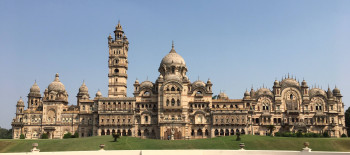
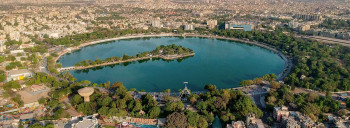
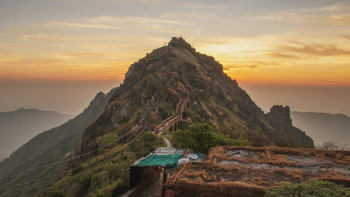
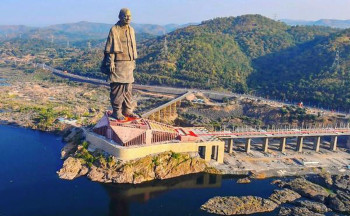
Rann Utsav packages you can book now
Our latest Rann Utsav packages on Vibrant Holidays — 1 to 12 nights. Every package can be customised for departure from Ahmedabad.
Rann Utsav package price guide from Ahmedabad
Our Gujarat packages currently start at ₹11,000 per person, with 24 live today. The tent city sets its own tariff for each tent type and each date; it publishes those rates on its booking site, and they change through the season. Full-moon nights and the last ten days of December are the most expensive, while early November and late February are usually the gentlest. So the table below is a planning band, per person on twin sharing, including stay, the meals and activities that come with the stay, a private AC car with driver from Ahmedabad and back, and the White Rann permit.
| Trip length | Standard (Bhuj hotel or bhunga resort near Dhordo) | Deluxe (tent city, AC Swiss cottage) | Premium (tent city premium tent or suite) |
|---|---|---|---|
| 2 nights (Dhordo only) | ₹9,000 – 14,000 | ₹16,000 – 26,000 | ₹28,000 – 45,000 |
| 3 nights (Dhordo plus Bhuj) | ₹12,000 – 18,000 | ₹20,000 – 32,000 | ₹34,000 – 55,000 |
| 4 nights (adds Dholavira) | ₹15,500 – 23,000 | ₹25,000 – 39,000 | ₹42,000 – 68,000 |
| 5 nights (adds Mandvi) | ₹19,000 – 28,000 | ₹30,000 – 46,000 | ₹50,000 – 80,000 |
Why the Standard column is cheaper: you do not have to sleep in the tent city to see the White Rann. Bhunga-style resorts in Dhordo, Hodka and nearby villages, and good hotels in Bhuj, cost far less, and the salt flats are open to anyone with a permit. You lose the evening programme inside the tent city, but many families prefer the quieter resorts.
What is usually extra: paramotoring, ATV and camel-cart rides at Dhordo, Bhuj museum and palace tickets, Dholavira's site ticket, shopping in the craft villages, and lunches outside the stay. During the Rann Sale in late July, the operator offered 25% off advance bookings for this season, subject to its own terms; offers like that are the operator's, and we pass on whatever applies on the day you book.
Tent city at Dhordo: what the categories mean
Tent names and prices are set by the operator and change from season to season, so read this as a guide to the kinds of stay, not a rate card.
- Non-AC and AC Swiss cottages: canvas tents on a raised base with a proper attached bathroom, hot water and heaters for winter nights. AC hardly matters in December and January; it helps in early November and March.
- Premium tents: larger, better furnished, often nearer the dining halls and the cultural stage.
- Suites (Rajwadi or similar names): the largest tents with a sitting area, sometimes in a separate cluster. They cost several times a cottage.
- Packages are by night: the tent city sells one-, two- and three-night stays that bundle meals, the transfer from Bhuj on some packages, visits to the White Rann at sunset and sunrise, and short trips to Kalo Dungar and nearby villages. Check-in and check-out days are fixed for some packages.
- Food: large dining halls serve buffet Gujarati and Kathiyawadi food with other options; Jain meals are possible when requested in advance.
As of November 2026 the operator has also added seasonal tents at Dholavira, which makes a separate night near the Harappan site possible for the first time without a long drive back.
How to reach Dhordo from Ahmedabad
| Mode | Route | Time | Notes |
|---|---|---|---|
| Private car (our usual choice) | Ahmedabad – Bagodara or Viramgam – Malia – Samakhiali – Bhachau – Bhuj – Dhordo | About 400 km, 7–8 hours to Dhordo; about 330 km, 6–6½ hours to Bhuj | Stops at Malia and Bhachau; the car stays with you for all Kutch sightseeing |
| Namo Bharat Rapid Rail | Ahmedabad Junction (Kalupur) 5:30 pm to Bhuj 11:10 pm | About 5 hours 40 minutes | Reserved chair car; night in Bhuj, Dhordo next morning |
| Overnight and day trains | Kutch Express and other trains from Kalupur or Sabarmati to Bhuj | About 6½–8 hours | Overnight berths save a hotel night |
| Flight | Bhuj airport is served mainly from Mumbai | Not a practical link from Ahmedabad | Useful if you are coming from Mumbai |
Train timings are as of November 2026 and we recheck them when booking. From Bhuj, Dhordo is about 85 km north, 1½–2 hours on a good road through Khavda junction and the Bhirandiyara check-post. The well-known mawa sweet of Bhirandiyara is sold at the stalls there.
Distances in Kutch
- Dhordo – Kalo Dungar: about 45 km, 1 hour.
- Dhordo – Hodka, Bhirandiyara, Ludiya craft villages: 10–30 km.
- Bhuj – Bhujodi: 8 km; Bhuj – Nirona: about 40 km.
- Bhuj – Mandvi: about 60 km, 1¼ hours.
- Dhordo – Dholavira: about 230 km via the Khavda–Dholavira road, 4–4½ hours; from Bhuj it is about 220 km via Rapar.
Full-moon nights and the White Rann permit, 2026–27
The salt reflects moonlight so strongly that a full-moon night on the Rann is bright enough to walk without a torch. Those nights, and one night either side, are the most requested of the season. Full moon falls on these dates in India for the 2026–27 season:
| Full moon | Best nights to book | Note |
|---|---|---|
| 24 November 2026 | 23–25 November | Early season; the salt may still be damp in patches |
| 24 December 2026 (early morning) | 22–24 December | Overlaps Christmas week; the busiest and costliest dates |
| 22 January 2027 | 21–23 January | Close to the Republic Day weekend; cold nights |
| 20–21 February 2027 | 19–21 February | Milder nights and often better value |
The next full moon, on 22 March 2027, falls after the festival ends on 7 March.
Permit
- Every visitor to the White Rann needs an entry permit. It can be taken online on the district's permit portal before you travel, or at the Bhirandiyara check-post on the way. Photo ID is needed for the lead traveller.
- Fees have long been small: about ₹100 per adult, ₹50 per child and ₹50 per car. We confirm the current amount and take the permit for you.
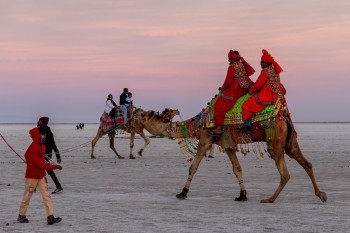
- The salt viewing area, with its watchtower, is a short walk or camel-cart ride from the parking. Vehicles are not allowed onto the salt itself.
- India Bridge and the road beyond Kalo Dungar are in a border zone. Access has needed separate clearance in recent seasons; we check what is allowed before promising it.
Three Rann Utsav itineraries from Ahmedabad
2 nights / 3 days – tent city and the salt
- Day 1: Leave Ahmedabad at 6 am; breakfast near Malia, lunch in Bhuj. Reach Dhordo by mid-afternoon, check in and go out to the White Rann for sunset. Folk music and dinner in the evening.
- Day 2: Sunrise on the salt (optional), breakfast, Kalo Dungar for the view across the Rann and the Dattatreya temple, then Hodka or Ludiya villages for embroidery and bhunga homes. Back to the White Rann for moonrise if you have chosen a full-moon date.
- Day 3: Bhirandiyara mawa on the way out; drive home, reaching Ahmedabad by early evening.
3 nights / 4 days – with Bhuj and the craft villages
- Day 1: Namo Bharat from Kalupur in the evening; car meets you at Bhuj station; night in Bhuj.
- Day 2: Bhujodi for weaving and the Vande Mataram memorial, Ajrakhpur for block-printing, then on to Dhordo for sunset on the salt.
- Day 3: Kalo Dungar in the morning, Nirona on the way back for Rogan art and copper bells; second evening on the Rann.
- Day 4: Aina Mahal and Prag Mahal in Bhuj, Kutch Museum (closed on some weekdays), drive home.
4 nights / 5 days – Rann Utsav with Dholavira
- Days 1–2: Ahmedabad to Dhordo; White Rann at sunset; Kalo Dungar and villages on day two.
- Day 3: Drive to Dholavira across Khadir Bet on the Road to Heaven, the narrow causeway with the Rann on both sides. Evening at the site or the fossil park; night in the new seasonal tents or a simple resort.
- Day 4: Dholavira excavation and museum in the morning (UNESCO World Heritage Site since 2021); drive to Bhuj via Rapar.
- Day 5: Morning in Bhuj or a quick Mandvi detour for the beach and Vijay Vilas Palace; drive home.
Every trip is private, with your own car and driver; we can start at Dholavira and end at Dhordo if your full-moon night falls later in the trip.
Kalo Dungar, crafts, Mandvi and Dholavira
- Kalo Dungar (Black Hill): the highest point in Kutch, about 460 m, with a view right across the salt to the border on clear days. The Dattatreya temple at the top feeds jackals every evening, a tradition many visitors find moving. The road has a famous "magnetic" stretch where cars appear to roll uphill.
- Bhujodi: Vankar weaving families sell shawls and stoles from their homes; the Shrujan crafts centre and the Living and Learning Design Centre near Bhuj explain the different embroidery styles.
- Nirona: one family keeps Rogan painting alive; also lacquer work and hand-beaten copper bells.
- Hodka, Ludiya and Gandhi nu Gam: painted bhungas and Meghwal and Harijan embroidery; buy directly from the artisans and ask before photographing people.
- Mandvi: the Vijay Vilas Palace, the old shipbuilding yard where wooden dhows are still built by hand, and a long beach. Mandvi's dabeli is said to have started here.
- Dholavira: one of the largest Harappan cities, with reservoirs, a signboard inscription site and the famous drainage system. The wood-fossil park nearby is worth half an hour.
Month-by-month for the White Rann
| Month | Desert weather | Salt and festival | Crowds and prices |
|---|---|---|---|
| November | Days 30–33°C, nights 15–18°C | Rann Utsav opens 1 November; salt firming up, patches may be wet | Diwali vacation busy; quieter after mid-month |
| December | Days 25–28°C, nights 8–12°C | Salt at its whitest | Peak, especially 20–31 December |
| January | Days 24–27°C, nights can fall to 5°C | Excellent; cold, clear skies for stars | High around Uttarayan and Republic Day |
| February | Warming, nights 10–14°C | Still very good | Medium; better value |
| March | Hot days, 33–36°C | Festival ends 7 March | Low |
| April to June | Very hot, 40°C plus | Salt visible but harsh heat; no tent city | Bhuj hotels only |
| July to September | Monsoon | Rann flooded; not worth visiting for the salt | Kutch is green but the White Rann is under water |
| October | Hot, humid | Rann drying out; access depends on the year's rain | Wait for November |
For a full-moon night in December or January, book eight to ten weeks ahead. In February, three to four weeks is often enough.
Food, packing and tips for families from Ahmedabad
- Food: Kutch is vegetarian-friendly. The tent city and Bhuj hotels serve Gujarati and Kathiyawadi meals; try Kutchi dabeli in Mandvi and the mawa of Bhirandiyara. Jain food is widely understood, but tell us so the kitchen is informed in writing.
- Cold nights: the desert drops sharply after sunset. Pack a proper jacket, woollen cap, gloves and socks for December and January; a shawl is not enough on the salt at moonrise.
- Sun and glare: sunglasses, sunscreen and a cap for the daytime; the white salt reflects strongly.
- Feet: closed shoes you do not mind getting salty; wipe them after each visit.
- Seniors: the walk from parking to the salt viewing area is flat but a few hundred metres; camel carts help. Kalo Dungar has a steep last stretch that a car can manage.
- Networks: mobile signal is fine at Dhordo but weak towards Dholavira and the border road; download maps.
- ID: carry original photo ID for every adult, needed for the permit and the border-area check-posts.
- Chauvihar: sunset on the Rann is around 6 pm in winter; we ask for an early meal so you can eat before heading out.
Why book Rann Utsav with Vibrant Holidays
- Based in Ahmedabad for 11 years: plan face to face at our C G Road office, open Monday to Saturday, or entirely on WhatsApp.
- Honest about tent rates: we show the operator's rate for your date and tell you when a bhunga resort or Bhuj hotel gives the same White Rann for less.
- Private car from your door: no coach transfers; families and friends travel as a private group on their own dates.
- Permit, trains and full-moon dates handled: White Rann permit, Namo Bharat seats and full-moon availability checked in one go.
- Help while you travel: 24×7 support and the toll-free line 1800-313-4262. IATA-accredited; member of TAAI, TAFI, ADTOI and IATO; recognised by the Ministry of Tourism, Government of India.
Browse our Gujarat tour packages, see Rajasthan from Ahmedabad for another winter road trip, the best places to visit in December, or all tour packages from Ahmedabad.
More Gujarat road trips: Dwarka and Somnath tours from Ahmedabad and Saputara trips from Ahmedabad.
Plan your Rann Utsav trip with an Ahmedabad team
Tell us your dates, budget and who is travelling. We reply with a day-wise plan and a clear price, usually the same day.
Get a Free Quote WhatsApp 9089090790Rann Utsav tour from Ahmedabad: FAQs
How much does a Rann Utsav tour package from Ahmedabad cost?
Our Rann Utsav packages currently start at ₹11,000 per person for 1 nights. Most of our Rann Utsav packages fall between ₹22,500 and ₹38,500 per person. The final cost depends on the travel month, hotel category, number of travellers and whether flights from {$from} are added. Open any package below to see exactly what is included, or ask us for a quote with flights.
What are the Rann Utsav 2026–27 dates?
Gujarat Tourism and the tent-city operator have announced Rann Utsav 2026–27 from 1 November 2026 to 7 March 2027 at Dhordo in Kutch, as of November 2026. The White Rann can be visited with a permit outside these dates too, but the tent city, cultural programme and organised activities run only during the festival.
How far is Dhordo from Ahmedabad?
Dhordo is about 400 km from Ahmedabad, roughly seven to eight hours by car via Malia, Bhachau and Bhuj. Bhuj itself is about 330 km away. Many families break the journey with lunch in Bhuj and reach Dhordo by mid-afternoon, in time for sunset on the salt.
Can we go from Ahmedabad to Bhuj by train?
Yes. The Namo Bharat Rapid Rail leaves Ahmedabad Junction at about 5:30 pm and reaches Bhuj at about 11:10 pm, as of November 2026. The Kutch Express and other trains also run, some overnight. From Bhuj a car takes about 1½–2 hours to Dhordo. We recheck timings when booking.
Is a permit needed for the White Rann?
Yes. Every visitor needs an entry permit, taken online on the district permit portal or at the Bhirandiyara check-post on the way. The fee has long been small, about ₹100 per adult and ₹50 per car, with photo ID for the lead traveller. We confirm the current fee and arrange it with your booking.
When are the full-moon nights during Rann Utsav 2026–27?
Full moon falls on 24 November 2026, 24 December 2026 in the early morning, 22 January 2027 and 20–21 February 2027. Book the night of the full moon or one night either side. December and January full-moon nights sell out first, so book them eight to ten weeks ahead.
Do we have to stay in the tent city to see the White Rann?
No. Anyone with a permit can visit the salt. Bhunga-style resorts in Dhordo and Hodka, and hotels in Bhuj, cost much less than the tent city. You miss the evening programme inside the tent city, but you see the same White Rann at sunset and moonrise.
What is the best month for Rann Utsav?
December and January have the whitest, firmest salt and cold, clear nights, but they are also the most crowded and expensive. February is a good compromise with milder nights. Early November can still have wet patches on the Rann after a heavy monsoon. March days become hot.
How cold does it get at Rann Utsav?
December and January nights in the desert fall to about 5–10°C and feel colder on the open salt with the wind. Daytime is pleasant at 24–28°C. Pack a proper jacket, woollen cap, gloves and warm socks; the tents have heaters, but the moonrise visit is outdoors.
Can we combine Rann Utsav with Dholavira?
Yes, and it is worth it. Dholavira is about 230 km from Dhordo along the Khavda–Dholavira road, the scenic causeway called the Road to Heaven. Plan it as a separate day with a night near the site, where seasonal tents are now available, then return via Rapar and Bhuj.
Is Rann Utsav suitable for senior citizens?
Yes, with planning. Tents have attached bathrooms and heaters, and food is vegetarian. The walk from parking to the salt is flat; camel carts help elders. The long drive from Ahmedabad is the hardest part, so we suggest the train to Bhuj or a stop in Bhuj on the way.
Is Jain food available at the Rann Utsav tent city?
Yes, the dining halls serve Gujarati vegetarian food and can arrange Jain meals without onion, garlic or root vegetables when requested ahead. Bhuj has several pure-veg restaurants too. We write the requirement on the voucher and ask for early meals for travellers who follow chauvihar.
