Vietnam E-Visa for Indians: Fees, Process and Phu Quoc Rule (2026)
Mainland Vietnam still needs a visa for Indian passports. The official e-visa costs USD 25, allows up to 90 days and is approved online in about three working days, if you use the right website.
Do Indians need a visa for Vietnam? Yes. As of October 2026, an Indian passport holder needs a visa to enter mainland Vietnam, whether the trip is Hanoi and Ha Long Bay, Da Nang and Hoi An, or Ho Chi Minh City and the Mekong. The simplest option by far is the government e-visa: you apply on the official portal, pay USD 25 for a single entry or USD 50 for multiple entries, and download an approval letter, normally in about three working days. It allows a stay of up to 90 days. Vietnam widened its visa-free list in 2025 and 2026, but those additions were European countries; India was not included.
There is one narrow exception. Phu Quoc island lets foreigners, Indians included, stay up to 30 days without a visa if they fly in directly from abroad and leave directly from the island. The Embassy of India in Hanoi advised in April 2026 that Indians should still carry a proper visa even for an island-only trip. This guide covers every option with costs in rupees, the exact portal steps, the documents to keep ready, the mistakes that cause refusals, and the fake websites that charge three to five times the real fee. Information is as of October 2026; rules change — we check before you book.
Updated October 2026 by the Vibrant Holidays team, Ahmedabad.
Holiday packages for the places in this guide
Our latest matching packages on Vibrant Holidays — 3 to 12 nights. Every package can be customised for departure from your city.
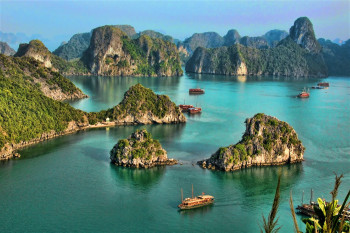

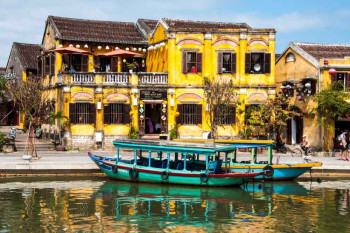

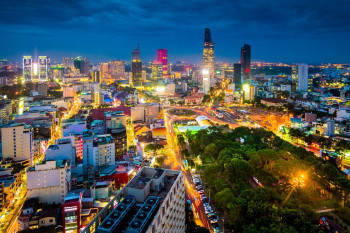
Vietnam visa options for Indian travellers
| Option | Stay | Official cost | Approx. in ₹ | Verdict |
|---|---|---|---|---|
| E-visa, single entry | Up to 90 days | USD 25 | about ₹2,200 | Best for a normal one-country holiday |
| E-visa, multiple entry | Up to 90 days, re-entry allowed | USD 50 | about ₹4,400 | Needed if you pop into Cambodia, Laos or Thailand and come back |
| Visa on arrival with approval letter | Usually 30 days | Agency letter fee + stamping fee in US dollar cash at the airport | Varies, usually higher | Largely replaced by the e-visa; airport queues and cash only |
| Embassy visa (sticker) | As granted | Set by the mission | Varies | Rarely needed by tourists now |
| Phu Quoc visa exemption | Up to 30 days, island only | Free | – | Only if you fly in and out of Phu Quoc directly; risky if anything changes |
Rupee figures assume roughly ₹88 to the US dollar and will move with the exchange rate. The portal charges in dollars on an international debit or credit card, so your bank may add a small foreign transaction charge of 1–3.5%.
Official portal versus look-alike sites
Search "Vietnam e-visa" and the first results are often paid ads from private websites with official-looking flags and the words "Vietnam Immigration" in the name. They take your passport data, charge USD 70–150, and then file the same application on the government portal. Some are slower than doing it yourself; a few have taken money and filed nothing.
- The government address: evisa.gov.vn, run by the Immigration Department of Vietnam's Ministry of Public Security. The Vietnamese-language mirror is thithucdientu.gov.vn. Both end in .gov.vn.
- The fee shown there: USD 25 or USD 50, with no "service" or "urgent" add-on. If the checkout shows anything else, you are on the wrong site.
- No agent needed: unlike Singapore, Vietnam allows individual applicants to apply themselves. A travel company can fill the form for you, but the government fee stays the same.
- Your registration code: the real portal gives a code after payment, which you use to look up the result. Keep it with the email.
When we file for clients we apply directly on the government portal and share the payment receipt, so you can see exactly what Vietnam charged.
How to apply for the Vietnam e-visa, step by step
- Prepare two images. A passport-style portrait (4 × 6 cm proportion, white background, looking straight ahead, no glasses) and a clear scan of the passport photo page including the two machine-readable lines at the bottom. JPG works best.
- Open the e-visa form on evisa.gov.vn and choose single or multiple entry.
- Enter personal details exactly as printed. Surname and given name go in separate boxes; if your passport has no surname, follow the portal's instruction and do not invent one. Religion, occupation and employer details are asked.
- Enter trip details: intended date of entry, the validity period you want (up to 90 days), your first address in Vietnam (the hotel), and the ports where you plan to enter and exit, such as Hanoi Noi Bai, Da Nang or Ho Chi Minh City Tan Son Nhat.
- Answer the declaration questions about previous visits and violations honestly.
- Pay online with an international card and note the registration code.
- Wait about three working days. Weekends and Vietnamese public holidays do not count.
- Look up the result with the code, email and date of birth. Download the PDF and check every letter of the name and passport number.
- Print two copies: one for the airline counter in India and one for the immigration officer.
The e-visa is linked to the passport you applied with. If you renew your passport before travel, the old e-visa does not carry over; apply again with the new number.
Entry ports: why the airport you choose matters
The e-visa form asks where you will enter and leave. Vietnam has expanded the list of e-visa ports several times, and it now includes all the main international airports, many land border gates and the major seaports. For tourists from India, the airports that matter are:
| Airport | Code | Used for |
|---|---|---|
| Noi Bai, Hanoi | HAN | North Vietnam: Hanoi, Ha Long Bay, Ninh Binh, Sapa |
| Tan Son Nhat, Ho Chi Minh City | SGN | South Vietnam: the city, Cu Chi, Mekong Delta |
| Da Nang | DAD | Central Vietnam: Ba Na Hills, Hoi An, Hue |
| Phu Quoc | PQC | Island holidays, often combined with the south |
| Cam Ranh | CXR | Nha Trang beach stays |
Fill in the airport on your actual ticket. Most Indian itineraries fly into Hanoi and out of Ho Chi Minh City, or the reverse, so the entry and exit ports are often different, which the form allows. If a flight is rescheduled to a different city, tell us before you travel so we can check whether anything needs to change.
The Phu Quoc exemption and the Indian Embassy advisory
Phu Quoc runs a special visa-free scheme for foreign visitors, Indians included: up to 30 days, provided you arrive on the island directly from another country and leave Vietnam directly from Phu Quoc. Step onto the mainland, even for a day in Ho Chi Minh City, and you need a full visa.
In April 2026 the Embassy of India in Hanoi issued an advisory reminding travellers that the exemption is limited strictly to the island. Medical emergencies, cancelled flights and bad weather can force a move to Ho Chi Minh City or Hanoi, and a traveller without a mainland visa can then face delays and immigration trouble. The Embassy recommended that Indians obtain a Vietnam visa even for Phu Quoc-only plans.
Our view: at about ₹2,200, the single-entry e-visa is cheap insurance. There are few direct flights from India to Phu Quoc, so most Indian travellers connect through Ho Chi Minh City or Hanoi anyway, and a domestic connection means you clear immigration on the mainland, which needs a visa.
Documents to keep ready
For the online application
- Passport valid for at least six months beyond your arrival date, with at least two blank pages.
- Portrait photo and passport photo-page scan, as above.
- First hotel address in Vietnam and planned entry date.
- Email address you check daily, and an international payment card.
To carry on the flight
- Printed e-visa approval for each traveller, including children.
- Return or onward ticket, and hotel vouchers for the whole stay.
- Travel insurance that covers medical treatment; private hospitals in Hanoi and Ho Chi Minh City are good but expensive.
- Some US dollars in clean, recent notes for emergencies, plus a card for local currency (dong) from ATMs.
Vietnam does not ask for bank statements or ITR for the e-visa, which is why it is one of the easier Asian visas for first-time travellers and self-employed applicants.
Mistakes that get Vietnam e-visas refused or reissued
- Name order reversed. The most frequent error. An e-visa issued to "Patel Rahul" when the passport reads surname PATEL, given name RAHUL may still be accepted, but airlines sometimes refuse boarding. A fresh application costs another USD 25.
- Photo with glasses or a busy background. The portal rejects these, losing days.
- Wrong validity dates. The visa starts on the date you choose. If your flight is on 20 December and the visa begins on 21 December, you cannot board.
- Single entry chosen for a Cambodia side trip. Leaving Vietnam to see Angkor Wat ends a single-entry visa; you would need a new one to come back.
- Applying on a look-alike site, then discovering the "visa" is only a receipt.
- Undeclared overstay on an earlier visit.
- Passport damaged or near expiry.
If the portal asks for corrections, you receive an email; reply within the stated time or the file closes and the fee is lost.
Timing tips: when to apply
| Trip timing | Apply | Reason |
|---|---|---|
| Tet (Lunar New Year; around 6 February in 2027) | 3–4 weeks before | Government offices close for about a week; processing stops |
| Late April to early May | 3 weeks before | 30 April and 1 May are national holidays, and Indian summer travel peaks |
| Around 2 September | 2–3 weeks before | National Day holiday |
| Diwali and Christmas | 3 weeks before | High Indian demand; flights fill first |
| Any other time | 10–14 days before | Three working days is typical, with room for a correction |
Applying too early is not a problem as long as the validity window covers your travel dates. We usually file once flights and hotels are confirmed so the details on the form match the tickets.
Who a Vietnam e-visa suits, and trips it covers
- First trip abroad: no bank papers, no agent, no biometrics. If you can upload a photo, you can get this visa.
- Self-employed and retired travellers who find salary-slip checklists awkward elsewhere.
- Long, slow trips: with up to 90 days you can go north to south over three or four weeks without any extension.
- Honeymooners pairing Hanoi and Ha Long Bay with Da Nang and Hoi An, or the Phu Quoc beaches.
- Multi-country routes: Vietnam with Cambodia's Angkor Wat, or Vietnam with Thailand. Choose multiple entry if you return to Vietnam; read our Thailand visa guide for that side.
Live prices are on our Vietnam holiday packages page. Travelling from Gujarat, see Vietnam tour packages from Ahmedabad for direct flights and itineraries. Comparing budgets, our international trips under ₹1 lakh and visa-free countries for Indians guides help.
What Vibrant Holidays does for your Vietnam visa
- Filed on the government portal only: we prepare and submit your e-visa on evisa.gov.vn and send you the official receipt; issuance is the Vietnam Immigration Department's decision.
- Name and date check: two people review each form against the passport and tickets before payment.
- Right entry type: we suggest single or multiple entry based on your route, including Cambodia or Thailand extensions.
- Printed pack: your PDF bundle includes the e-visa, flights, hotel vouchers and a day-wise plan.
- Private holidays, your dates: every Vietnam trip is planned for your family or friends alone, with Indian, veg and Jain meals arranged on request and confirmed in writing. 24×7 on-tour support; office on C G Road, Ahmedabad, open Monday to Saturday. Since 2015; IATA-accredited; member of TAAI, TAFI, ADTOI and IATO; recognised by the Ministry of Tourism, Government of India.
Plan your trip with Vibrant Holidays
Tell us your dates, budget and who is travelling. We reply with a day-wise plan and a clear price, usually the same day.
Get a Free Quote WhatsApp 9089090790Vietnam Visa: FAQs
Is Vietnam visa-free for Indians in 2026?
No, not for mainland Vietnam. As of October 2026 Indian passport holders need a visa, usually the e-visa. Vietnam's recent visa-free additions covered European countries, not India. The only exemption is Phu Quoc island, for up to 30 days, if you fly in and out of the island directly from abroad.
How much does the Vietnam e-visa cost for Indians?
On the official portal evisa.gov.vn the fee is USD 25 for single entry and USD 50 for multiple entry, roughly ₹2,200 and ₹4,400. You pay by international card, and your bank may add a small foreign transaction charge. Sites asking USD 70 or more are private resellers, not the government.
How long does the Vietnam e-visa take?
The usual processing time is about three working days, not counting weekends and Vietnamese public holidays. During Tet, the Lunar New Year, offices close for around a week, so files wait. Apply at least 10–14 days before travel in normal months and three to four weeks ahead for Tet or the 30 April holiday.
How many days can Indians stay in Vietnam on an e-visa?
Up to 90 days, within the validity dates you select on the form. You can stay for any period inside that window. A single-entry visa ends when you leave Vietnam; a multiple-entry visa lets you leave and return within the same dates, useful for a Cambodia or Laos side trip.
What is the official website for the Vietnam e-visa?
The government portal is evisa.gov.vn, run by the Immigration Department under the Ministry of Public Security, with a Vietnamese mirror at thithucdientu.gov.vn. Both end in .gov.vn. Many look-alike websites use similar names and flags but charge several times the official fee. Type the address directly instead of clicking search ads.
Can Indians get a visa on arrival in Vietnam?
A visa on arrival is technically possible at international airports, but only with an approval letter arranged by an agency before departure, and the stamping fee is paid in US dollar cash at the airport. Since the 90-day e-visa arrived it has become the slower and costlier route. For tourists, the e-visa is the better choice.
Do Indians need a visa for Phu Quoc?
Phu Quoc allows up to 30 days without a visa if you arrive directly from abroad and leave directly from the island. Any mainland stop, including a domestic connection, needs a visa. The Embassy of India in Hanoi advised in April 2026 that Indians should get a visa even for island-only trips, in case plans change.
Should I take a single or multiple entry Vietnam visa?
Choose single entry, USD 25, if you will enter Vietnam once and leave once. Choose multiple entry, USD 50, if your route leaves Vietnam and returns, such as Ho Chi Minh City to Siem Reap and back, or a Bangkok stopover in the middle. Transfers between Vietnamese cities on domestic flights do not count as exits.
What photo is needed for the Vietnam e-visa?
A recent portrait in 4 × 6 cm proportion with a plain white background, face looking straight at the camera, eyes open, mouth closed, and no glasses. You also upload a clear scan of the passport photo page showing the machine-readable lines. Blurry, cropped or tinted images are the common reason the portal asks for corrections.
Does the Vietnam e-visa need bank statements or ITR?
No. The e-visa form asks for passport details, a photo, your first address in Vietnam and trip dates, but not financial documents. Immigration can still ask about your plans on arrival, so carry a return ticket and hotel vouchers. That simplicity is why Vietnam suits self-employed and retired travellers well.
What if I made a mistake on my Vietnam e-visa?
If the portal has not yet decided, it may email you asking for corrections; reply within the time given. Once issued, an e-visa with a wrong name, passport number or dates cannot be edited, and you need a new application with a new fee. Check the PDF the day it arrives, not at the airport.
