- Home
- Holidays
- International
- Cambodia
Cambodia Tour Packages
Angkor Wat at sunrise, floating villages on Tonlé Sap and the royal city of Phnom Penh – 3 Cambodia packages, alone or paired with Vietnam and Thailand, from Ahmedabad.
- 3 packages
- From ₹21,999 per person
- Private trip, your own dates
- Pure-veg / Jain meals on request
Cambodia packages
3 trips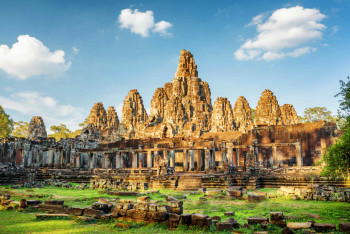 5N / 6D
Save ₹6,001
Ecstatic Cambodia Explorer – Temples & Cultural Wonders
2N Krong Siem Reap · 3N Phnom Penh
- Stay
- Sightseeing
- Transfers
- Breakfast
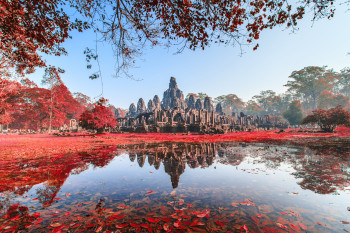 4N / 5D
Save ₹4,000
Cambodia Romantic Escape – Angkor & Riverside Charm
4N Krong Siem Reap
- Stay
- Sightseeing
- Transfers
- Breakfast
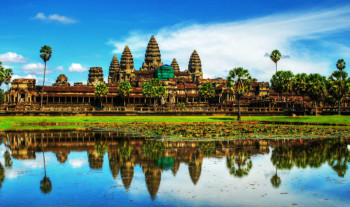 3N / 4D
Save ₹3,001
Idyllic Cambodia Journey – Heritage & Scenic Discovery
3N Krong Siem Reap
- Stay
- Sightseeing
- Transfers
- Breakfast
Cambodia is the one Southeast Asian destination that is about history rather than beaches and shopping. Angkor Wat – the largest religious monument in the world, built as a Vishnu temple in the 12th century – and the dozens of temples around it in Siem Reap are the reason to go, and for a Gujarati family the Hindu iconography, Ramayana carvings and Sanskrit-rooted names make the visit unusually personal. Phnom Penh adds the Royal Palace and a river-city evening, and the whole trip pairs naturally with Vietnam or Bangkok.
Every package on this page is live and bookable today. Below the packages we cover what Cambodia costs from Ahmedabad, how to get there through Bangkok or Ho Chi Minh City, three itineraries including the Vietnam–Cambodia combination, a practical Angkor guide for families and seniors (passes, sunrise timing, dress code, pacing), the month-by-month weather, honest vegetarian food advice, and the questions we answer most often.
Cambodia tour package price guide (2026)
Packages on this page start at ₹21,999 per person. Cambodia is one of the least expensive countries in Asia on the ground – hotels, guides and food cost less than in Thailand – so the international flight is a larger share of the total than usual. The bands below are per person on twin sharing, excluding international flights, and include hotels with breakfast, private transfers, an English-speaking guide at Angkor and the listed tours.
| Trip | Standard (3★) | Deluxe (4★) | Premium (5★) |
|---|---|---|---|
| 3N/4D Siem Reap – Angkor focus | ₹18,000 – 24,000 | ₹27,000 – 35,000 | ₹50,000+ |
| 5N/6D Siem Reap 3N + Phnom Penh 2N | ₹30,000 – 38,000 | ₹42,000 – 55,000 | ₹80,000+ |
| 7N/8D with Battambang or Koh Rong beach | ₹42,000 – 52,000 | ₹58,000 – 75,000 | ₹1,10,000+ |
| 8N/9D Vietnam + Cambodia (Hanoi/Halong – Ho Chi Minh – Siem Reap) | ₹65,000 – 80,000 | ₹90,000 – 1,15,000 | ₹1,60,000+ |
Add for flights: Ahmedabad–Siem Reap return fares via Bangkok are usually ₹28,000–42,000 per person when booked 6–8 weeks ahead; Diwali and the Christmas–New Year fortnight run higher. Usually extra on the ground: the Angkor pass (US$37 for one day, US$62 for three days, US$72 for seven days, paid in person or online by the traveller), the e-visa, Tonlé Sap boat tickets, the Phare circus in Siem Reap, lunches and dinners not listed, tips for guide and driver, and travel insurance. We print each of these on your quote so the final number is the real number.
How to reach Cambodia from Ahmedabad
- By air via Bangkok: the standard routing. Ahmedabad–Bangkok takes about 4 hours (non-stop on several days of the week, otherwise one stop), and Bangkok–Siem Reap or Bangkok–Phnom Penh is a 1-hour hop. Siem Reap's new international airport is about 45 minutes from town; we include the transfer. Allow 8–10 hours end to end including the connection.
- Via Ho Chi Minh City: for a Vietnam–Cambodia trip we fly Ahmedabad–Ho Chi Minh City with one stop, do Vietnam first, and finish with a short Ho Chi Minh City–Siem Reap or Phnom Penh flight (about 1 hour), returning from Siem Reap via Bangkok.
- Via Kuala Lumpur or Singapore: useful when Bangkok fares are high; both have direct flights to Siem Reap and Phnom Penh of around 2 hours.
- Inside Cambodia: Siem Reap–Phnom Penh is a 5–6 hour drive on a good highway or a 45-minute flight; we usually drive one way (with a stop at the Spean Praptos ancient bridge and Skun market) and fly the other. Angkor itself is covered by private air-conditioned car with your guide; tuk-tuks are fun for short hops in the cool season.
- Every trip is private: your own car, driver and guide on your own dates – extended families and friend groups travel together as a private group.
Best Cambodia itineraries by trip length
3 nights / 4 days – Siem Reap and Angkor (add-on or short break)
- Day 1: Arrive Siem Reap; evening Apsara dance dinner show or the Phare circus.
- Day 2: Angkor Wat at sunrise (depart hotel 4:45 am), return for breakfast; Angkor Thom, the Bayon's smiling faces, Terrace of the Elephants and Ta Prohm in the late morning; afternoon rest; Phnom Bakheng or Pre Rup for sunset.
- Day 3: Banteay Srei (the "citadel of women", finest carvings in Angkor) and Banteay Samré in the morning; afternoon Tonlé Sap floating village boat trip at Kampong Phluk; evening Old Market and Pub Street.
- Day 4: Fly out via Bangkok.
5 nights / 6 days – Siem Reap and Phnom Penh, the complete Cambodia
- Days 1–3: Siem Reap as above, with the Angkor National Museum added on Day 3 to put the temples in context.
- Day 4: Drive to Phnom Penh (5–6 h) with stops, or fly; evening sunset cruise on the Mekong–Tonlé Sap confluence.
- Day 5: Royal Palace and Silver Pagoda, National Museum, Wat Phnom, Central Market; afternoon optional visit to the genocide memorials for those who wish, or free time at the riverside.
- Day 6: Fly home via Bangkok.
8 nights / 9 days – Vietnam and Cambodia together
Two nights Hanoi (Old Quarter, Hoan Kiem lake, water puppets), one night on a Halong Bay cruise, two nights Ho Chi Minh City (Cu Chi tunnels, Mekong Delta day), then fly to Siem Reap for three nights of Angkor as above and return via Bangkok. This is the most popular way our Gujarati families do Cambodia – the temples at the end of the trip, when the pace has slowed. Adding Bangkok for two nights at the start makes it an 10-night three-country trip.
Senior citizens and temple pacing
Angkor involves uneven stone steps and heat. For parents we skip the sunrise if they prefer and do Angkor Wat at 7:30 am instead, limit temple visits to two per morning with the afternoon off, avoid the steep upper tier of Angkor Wat and the climb at Phnom Bakheng, and choose hotels with a pool for the midday break. A seven-day pass is not needed; a three-day pass covers everything at a relaxed pace.
Angkor Wat buyer's guide – passes, sunrise, dress code and e-visa
Angkor pass
- Sold as 1-day (US$37), 3-day (US$62, valid over 10 days) and 7-day (US$72, valid over a month). For a 3-night stay the 3-day pass is right; for a single full day of temples the 1-day pass.
- Bought at the official ticket centre on the way to the park (your photo is taken there) or online in advance; the pass is checked at every temple, so keep it on you. Children under 12 are free with a passport.
- A pass bought after 5 pm is valid from the next day and lets you catch that evening's sunset free – we use this on arrival day when flights land in time.
Sunrise at Angkor Wat
- Leave the hotel by 4:45–5:00 am; the gates open at 5 am and the reflecting pool on the left fills first. Sunrise is around 5:45–6:30 am depending on the month.
- Dry-season sunrises (November–March) are the clearest; in the wet season clouds often hide it, so we treat sunrise as optional then.
- Carry a torch, water and a light scarf; breakfast is back at the hotel or at the stalls near the temple.
Dress code
Angkor is a living religious site. Shoulders and knees must be covered to enter the upper levels of Angkor Wat and several other temples – no sleeveless tops, shorts above the knee or see-through fabrics. Loose cotton trousers or a long skirt with a T-shirt are ideal in the heat. Hats come off inside sanctuaries. The same rule applies at the Royal Palace in Phnom Penh.
Cambodia e-visa for Indians
- Indian passport holders need a visa. The simplest is the e-visa, applied for online and issued as a PDF to print and carry; it is valid for a 30-day stay and must be used within three months of issue. Visa on arrival is also available at the airports for a similar fee.
- We prepare and submit the e-visa application for every traveller – you send us a passport scan and a digital photo – and it is normally issued within 3 working days. Approval is at the discretion of the Cambodian authorities; in practice tourist e-visas for Indians are routine.
- The fee is around US$30 plus a small processing charge per person; we quote the current figure with your package.
- Passport validity of six months beyond the travel date is required; carry two printed copies of the e-visa (one for entry, one for exit).
Best time to visit Cambodia – month by month
| Months | Weather | Good for | Prices |
|---|---|---|---|
| November – February | Dry and the coolest of the year, 22–30°C, clear sunrises | Everyone; Diwali and Christmas departures from Ahmedabad; Water Festival (Bon Om Touk) usually in November | Highest, especially late December |
| March – April | Hot and dry, 32–38°C by April; Khmer New Year in mid-April | Budget travellers who can handle heat; temples at dawn and after 4 pm only | Moderate; many Cambodians travel during Khmer New Year |
| May – June | Very hot with the first rains, mostly short afternoon storms | Gujarat May vacation – workable with an early start and pool afternoons | Low |
| July – October | Monsoon: green countryside, moats full, afternoon downpours, Tonlé Sap at its highest | Photographers, couples wanting empty temples; floating villages at their best in September–October | Lowest of the year |
For a Gujarati family the Diwali window is ideal – the rains have just ended, the moats are full and the heat is bearable. The May vacation is hot; we schedule temples for 6–10 am and keep afternoons for the hotel pool or the museum.
Places to visit in Cambodia
- Angkor Wat: the 12th-century Vishnu temple with its five towers, bas-reliefs of the Churning of the Ocean of Milk and the Battle of Kurukshetra – the heart of the trip.
- Angkor Thom and the Bayon: the walled royal city with 200-plus serene stone faces and the Terrace of the Elephants.
- Ta Prohm: the jungle temple with giant silk-cotton trees growing through the walls, left as the French found it.
- Banteay Srei: a small pink-sandstone temple 35 km out with the most intricate carvings in Cambodia, dedicated to Shiva.
- Tonlé Sap: Southeast Asia's largest lake and the stilted or floating villages of Kampong Phluk and Kampong Khleang.
- Siem Reap town: Old Market, the Phare Cambodian Circus, Apsara dance shows and the Angkor National Museum.
- Phnom Penh: the Royal Palace and Silver Pagoda, the National Museum's Khmer sculpture, Wat Phnom, the riverside and Central Market.
- Battambang: colonial streets, the bamboo train and Phnom Sampeau's bat cave at dusk – a quieter Cambodia, 3 hours from Siem Reap.
- Koh Rong and Koh Rong Samloem: white-sand islands off Sihanoukville for a beach finish; best December–April.
- Kampot and Kep: pepper farms, a river town and seafood-and-fruit markets in the south, for second visits.
Food, hotels and tips for Gujarati travellers
- Vegetarian and Jain food – the honest picture: Khmer cooking uses fish sauce and prahok (fermented fish paste) in most dishes, so ordinary local restaurants are not safe for strict vegetarians. The good news is that Siem Reap, because of its tourist traffic, has several Indian restaurants (including pure-vegetarian ones) within a few minutes of the Old Market, a number of Western vegetarian and vegan cafés, and hotel kitchens used to cooking plain vegetable curries, fried rice and noodles without fish sauce on request. Phnom Penh has a handful of Indian restaurants near the riverside. Jain food is available only at the Indian restaurants and only with advance notice, which we give in writing. Fresh fruit – mango, dragon fruit, rambutan – is excellent and cheap.
- Carry a backup: families with us carry theplas, khakhra and instant upma for sunrise mornings and long temple days; most hotels will provide hot water and a kettle.
- Hotel categories: Siem Reap offers outstanding value – 4-star boutique hotels with pools cost what a 3-star costs in Bangkok. Choose a hotel within 10 minutes of the Old Market and with a pool for the midday break. In Phnom Penh, the riverside or BKK1 district is best for walking to restaurants.
- Money: US dollars are used everywhere alongside the Cambodian riel (small change comes in riel). Carry clean, untorn dollar notes; cards work in hotels and larger restaurants. Budget ₹1,500–2,500 per person per day for meals and small spends.
- Pack: loose, modest cotton clothing for the dress code, a hat and sunscreen, mosquito repellent for dawn and dusk, slip-on shoes for temple steps, a scarf, and a small torch for sunrise. Electric sockets take two-pin plugs similar to India's; a universal adaptor is still useful.
- Health and etiquette: drink only bottled water; do not touch a monk or point your feet at a Buddha image; ask before photographing people in villages.
Why book your Cambodia package with Vibrant Holidays
- 11 years, Ahmedabad office: meet us at C G Road, Monday to Saturday, or plan everything on WhatsApp with one consultant from quote to return.
- Live prices, no bait: the starting price here is a package on sale today, with the Angkor pass, e-visa and other exclusions shown openly rather than discovered in Siem Reap.
- Vegetarian and Jain meals planned honestly – hotels near the Indian restaurants, requests sent to kitchens in writing, and a restaurant list for Siem Reap and Phnom Penh.
- Flights from Ahmedabad and the e-visa handled with your package – we prepare and submit the application; approval rests with the Cambodian authorities, and the three-day turnaround is built into our timeline.
- 24×7 on-tour support from our Ahmedabad team and our Siem Reap ground partner. Vibrant Holidays is IATA-accredited, a member of TAAI, TAFI, ADTOI and IATO, and recognised by the Ministry of Tourism.
Cambodia tour packages – frequently asked questions
How much does a Cambodia trip cost from Ahmedabad?
Packages on this page start at ₹21,999 per person. A 5-night Siem Reap and Phnom Penh trip in 3-star hotels costs ₹30,000–38,000 per person excluding flights; 4-star hotels take it to ₹42,000–55,000. Return flights from Ahmedabad via Bangkok add about ₹28,000–42,000, and the Angkor 3-day pass (US$62) and e-visa (about US$30) are extra.
Do Indians need a visa for Cambodia?
Yes. The easiest option is the e-visa, which we prepare and submit online for every traveller; it is normally issued within three working days as a PDF to print and carry, valid for a 30-day stay. Visa on arrival is also available at Siem Reap and Phnom Penh airports. Approval is at the discretion of the Cambodian authorities, though tourist e-visas for Indians are routine.
How many days are enough for Cambodia?
Three nights in Siem Reap covers Angkor properly, including sunrise, Banteay Srei and Tonlé Sap. Five nights adds Phnom Penh. Seven nights lets you include Battambang or a Koh Rong beach. Most of our Gujarati families do Cambodia as a 3-night finish to a Vietnam or Thailand trip, which makes an 8–10 night holiday.
How do we get to Cambodia from Ahmedabad?
Via Bangkok. Ahmedabad–Bangkok takes about 4 hours, and Bangkok–Siem Reap or Phnom Penh is a 1-hour flight; total journey is 8–10 hours. For a Vietnam–Cambodia trip we fly into Ho Chi Minh City and finish in Siem Reap, returning via Bangkok. Kuala Lumpur and Singapore are alternative connecting points.
When is the best time to visit Angkor Wat?
November to February – dry, 22–30°C, with clear sunrises – which coincides with Diwali and Christmas holidays. March–April is very hot; May–October is the monsoon, with full moats, green countryside and the lowest prices but cloudy sunrises. For the May vacation we schedule temples before 10 am and leave afternoons free.
Is vegetarian and Jain food available in Cambodia?
Khmer food relies on fish sauce, so local restaurants are not safe for strict vegetarians. Siem Reap has several Indian restaurants, including pure-veg, near the Old Market, plus vegetarian cafés and hotel kitchens that cook plain dishes on request. Jain meals are available at the Indian restaurants with advance notice, which we give in writing. We also suggest carrying dry snacks for sunrise mornings.
Can we combine Cambodia with Vietnam or Thailand?
Yes, and most travellers do. An 8-night Vietnam–Cambodia trip (Hanoi, Halong Bay, Ho Chi Minh City, Siem Reap) costs ₹65,000–80,000 per person in 3-star hotels excluding flights. A 3-night Siem Reap leg adds about ₹18,000–24,000 to a Bangkok trip plus the Bangkok–Siem Reap flight. Three-country trips of 10–11 nights are also possible.
What is the Angkor pass and is it included?
The Angkor pass is the government ticket to the whole Angkor Archaeological Park: US$37 for one day, US$62 for three days and US$72 for seven days, free for children under 12. It is bought in the traveller's name with a photo, so it is normally paid on the spot rather than included. We tell you which pass you need and arrange the ticket-centre stop.
Is Cambodia suitable for senior citizens?
Yes, with sensible pacing. Temples have uneven steps and the heat builds by 10 am, so we plan two temples per morning, keep afternoons free, skip the steep upper tiers, make sunrise optional and choose hotels with pools and lifts. The private car and guide wait at each temple, so nobody walks more than they want to.
Is Cambodia safe, and what about the currency?
Cambodia is safe for tourists, with the usual care for bags in markets. US dollars are the working currency alongside the riel; carry clean notes and a card for hotels. Budget about ₹1,500–2,500 per person per day for meals and small purchases. Tap water is not drinkable; bottled water is cheap and provided by hotels.
What is usually not included in a Cambodia package?
International flights unless added, the Angkor pass, the e-visa fee, Tonlé Sap boat tickets, the Phare circus or Apsara dinner show unless named, meals not listed, tips for guide and driver (about US$5–8 per day for the group), travel insurance and 5% GST. Every exclusion is a separate line on our quote.
Why is Angkor Wat special for Indian travellers?
Angkor Wat was built in the 12th century as a Vishnu temple by King Suryavarman II, and its galleries carry some of the finest Ramayana and Mahabharata carvings anywhere, including the Churning of the Ocean of Milk. Banteay Srei is dedicated to Shiva, and the Bayon mixes Buddhist and Hindu imagery. Our guides explain these panels in detail, which Gujarati families find deeply moving.
Plan more with Vibrant Holidays
Updated October 2026 by the Vibrant Holidays team, Ahmedabad.

